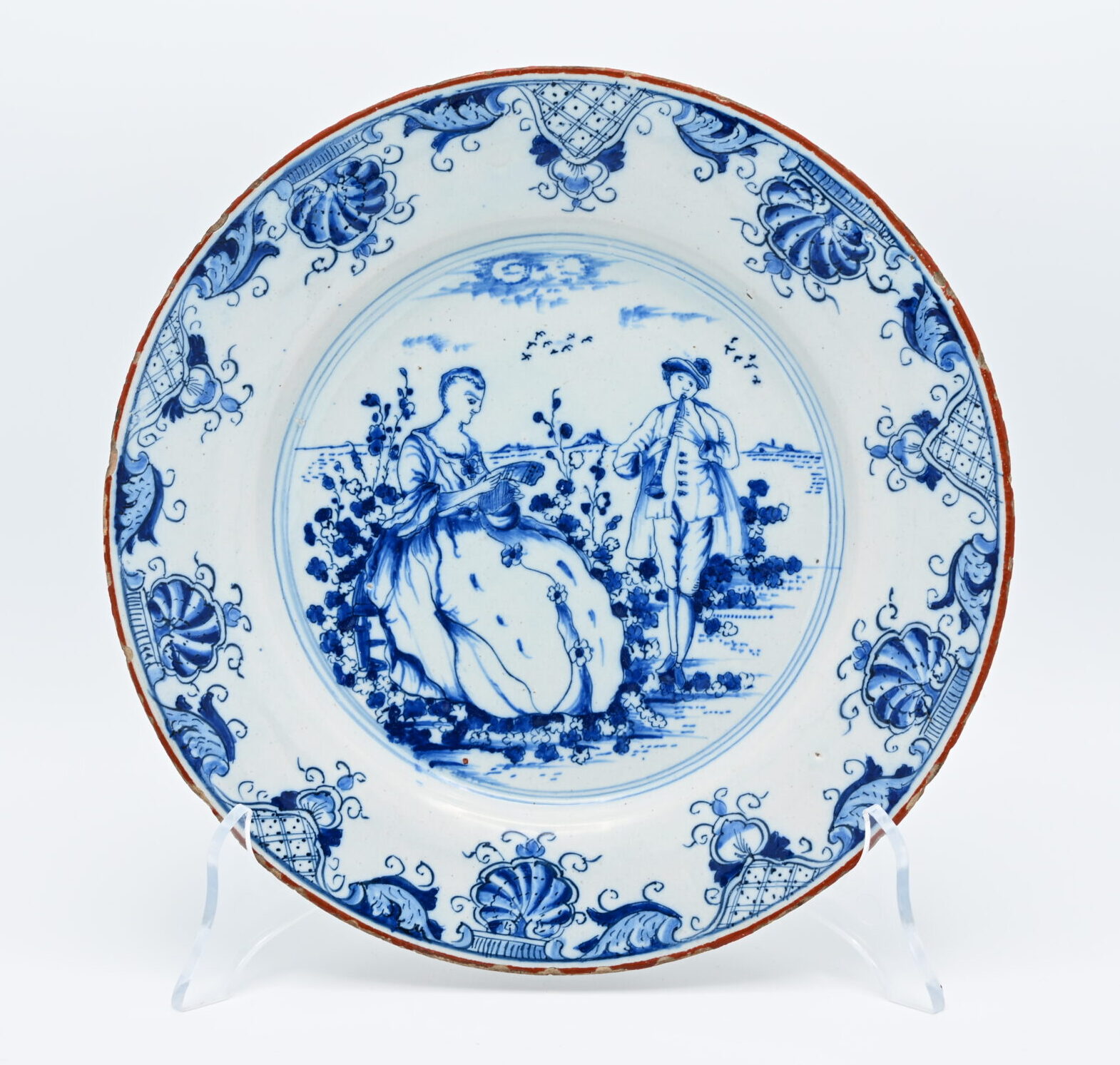
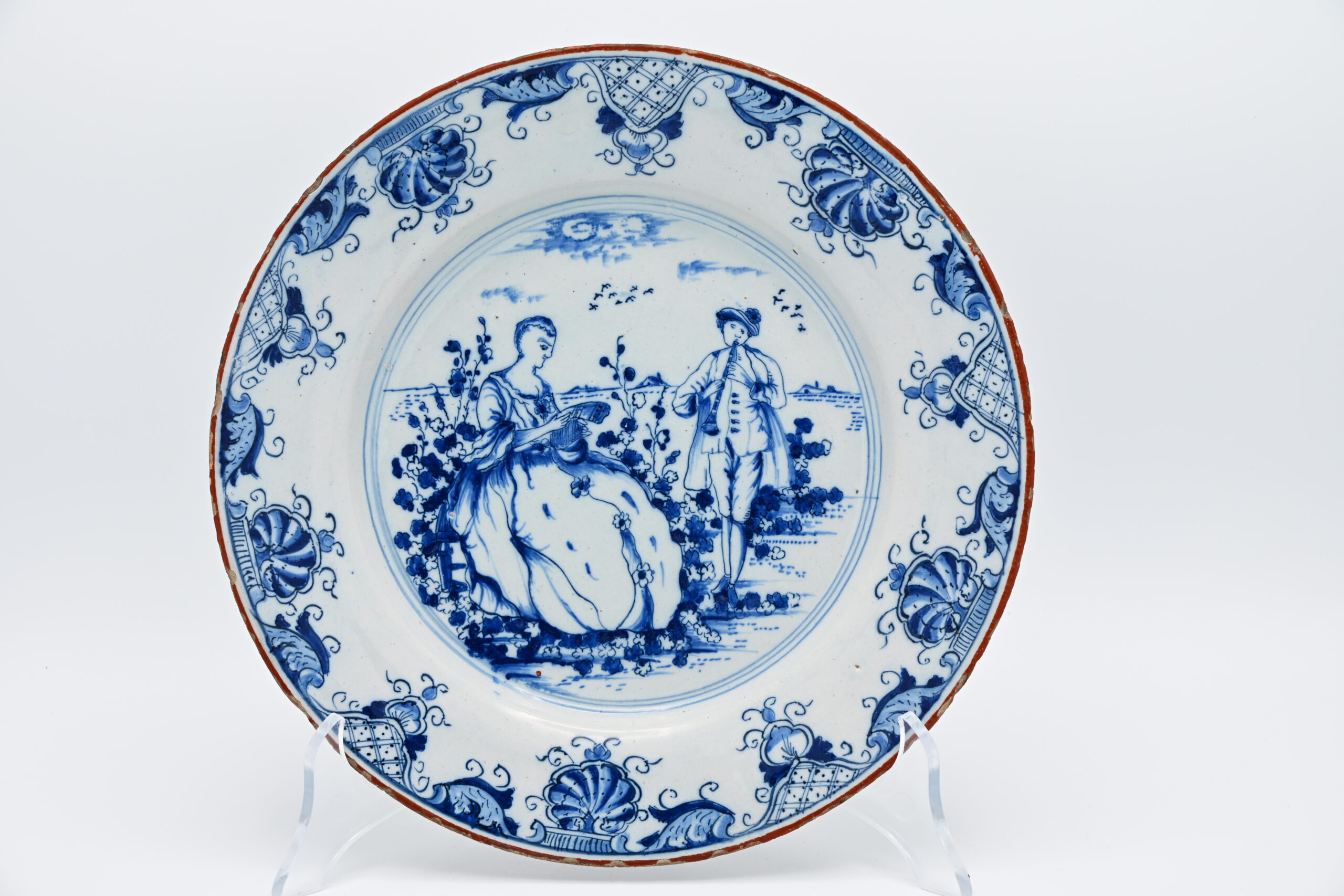
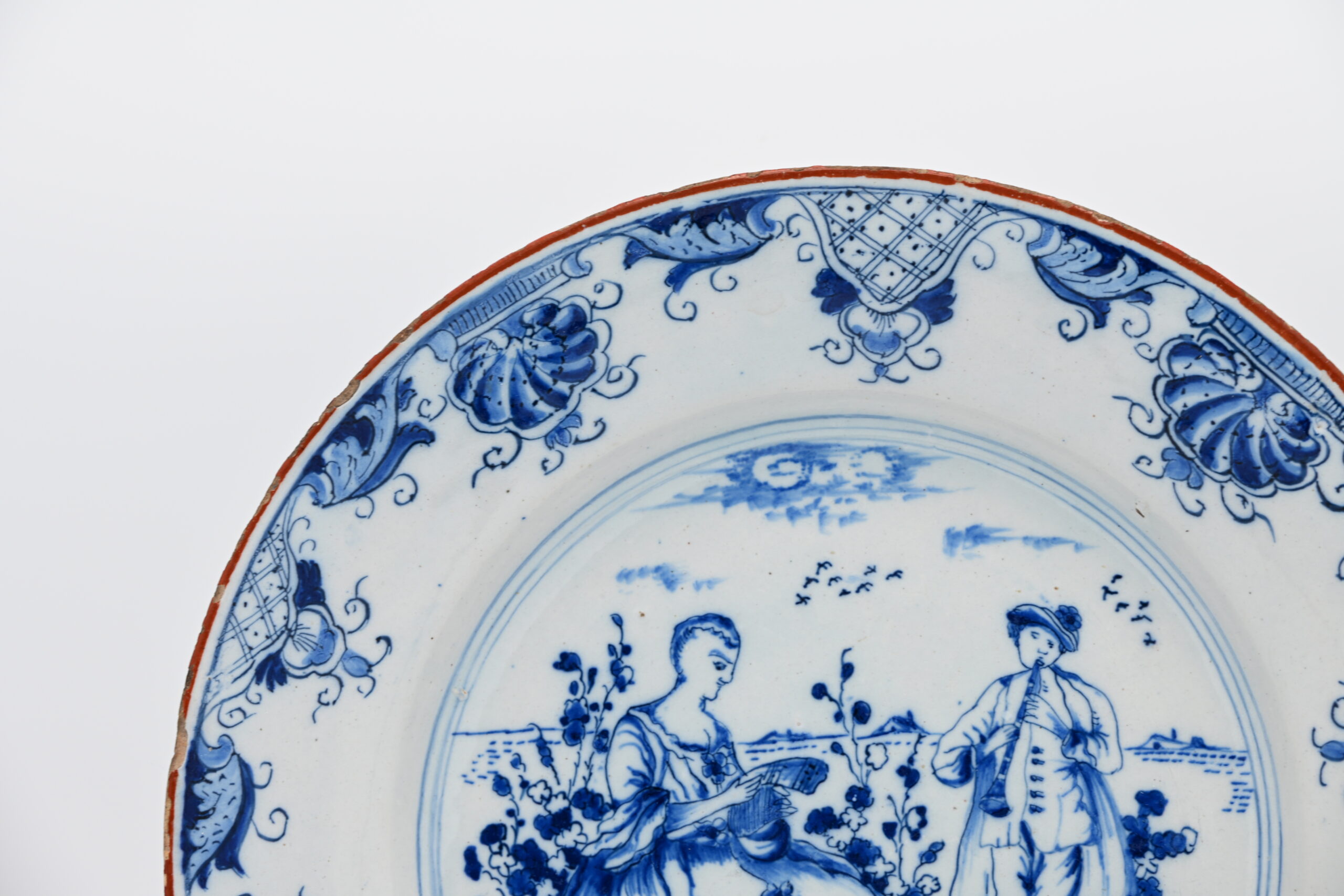
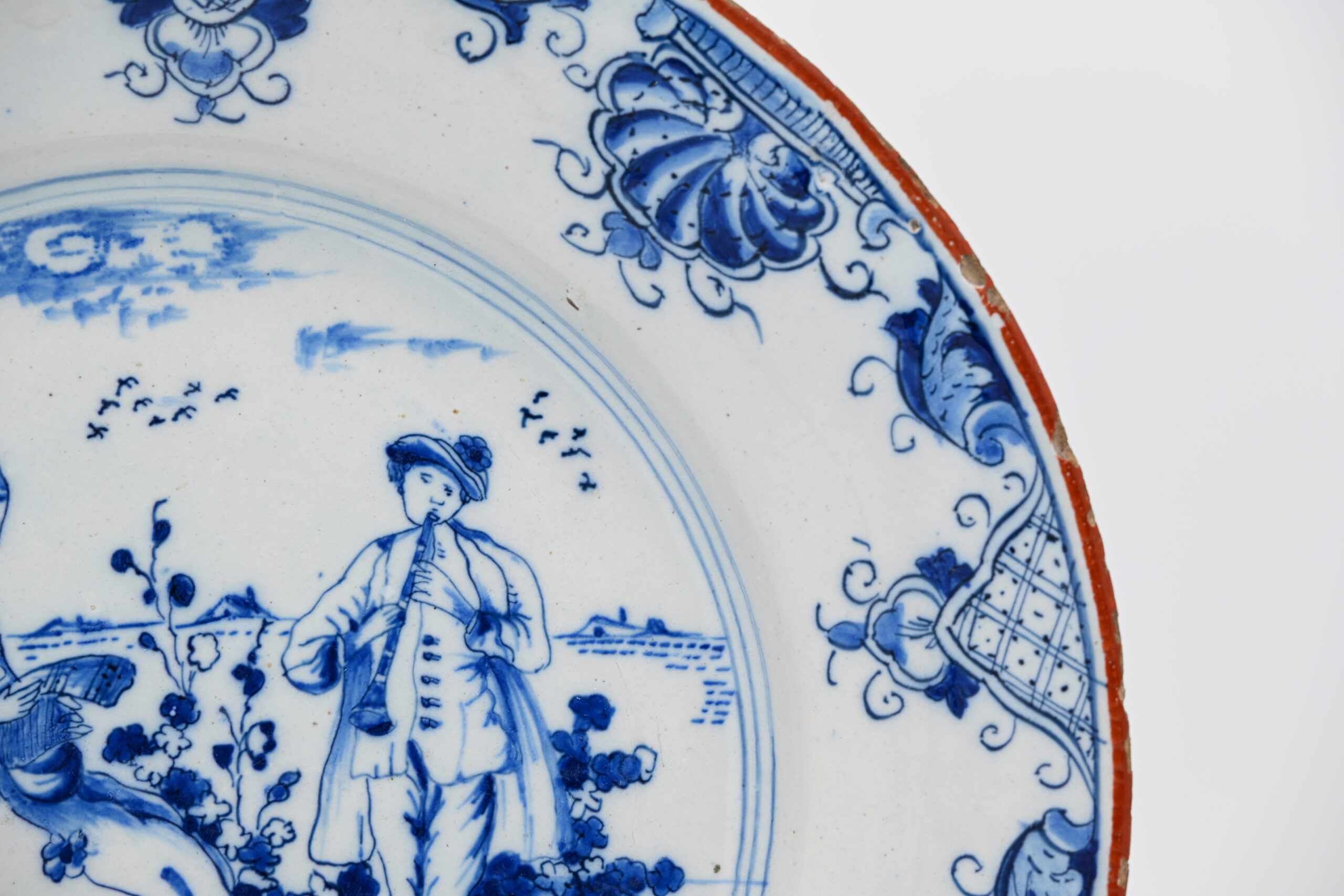
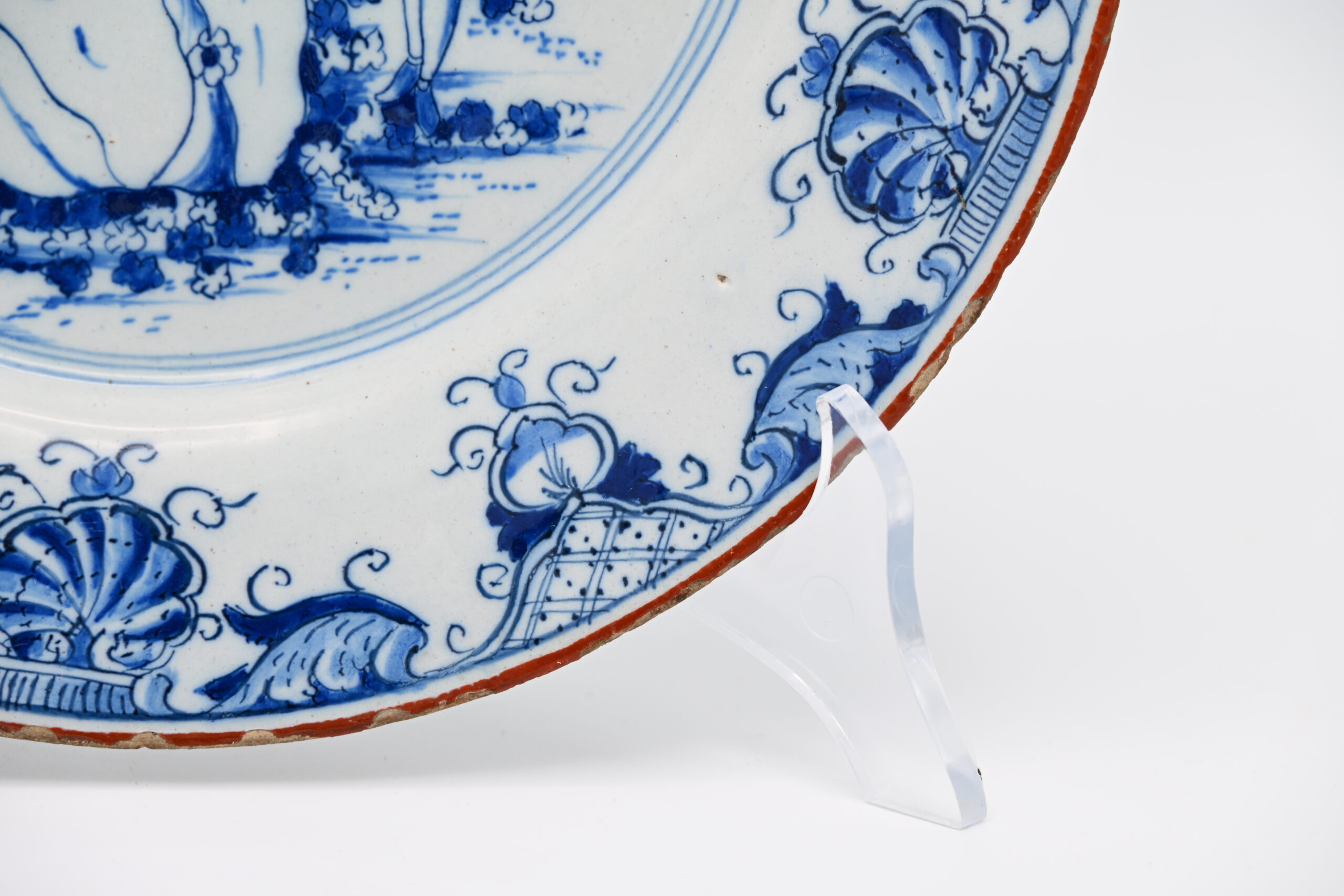
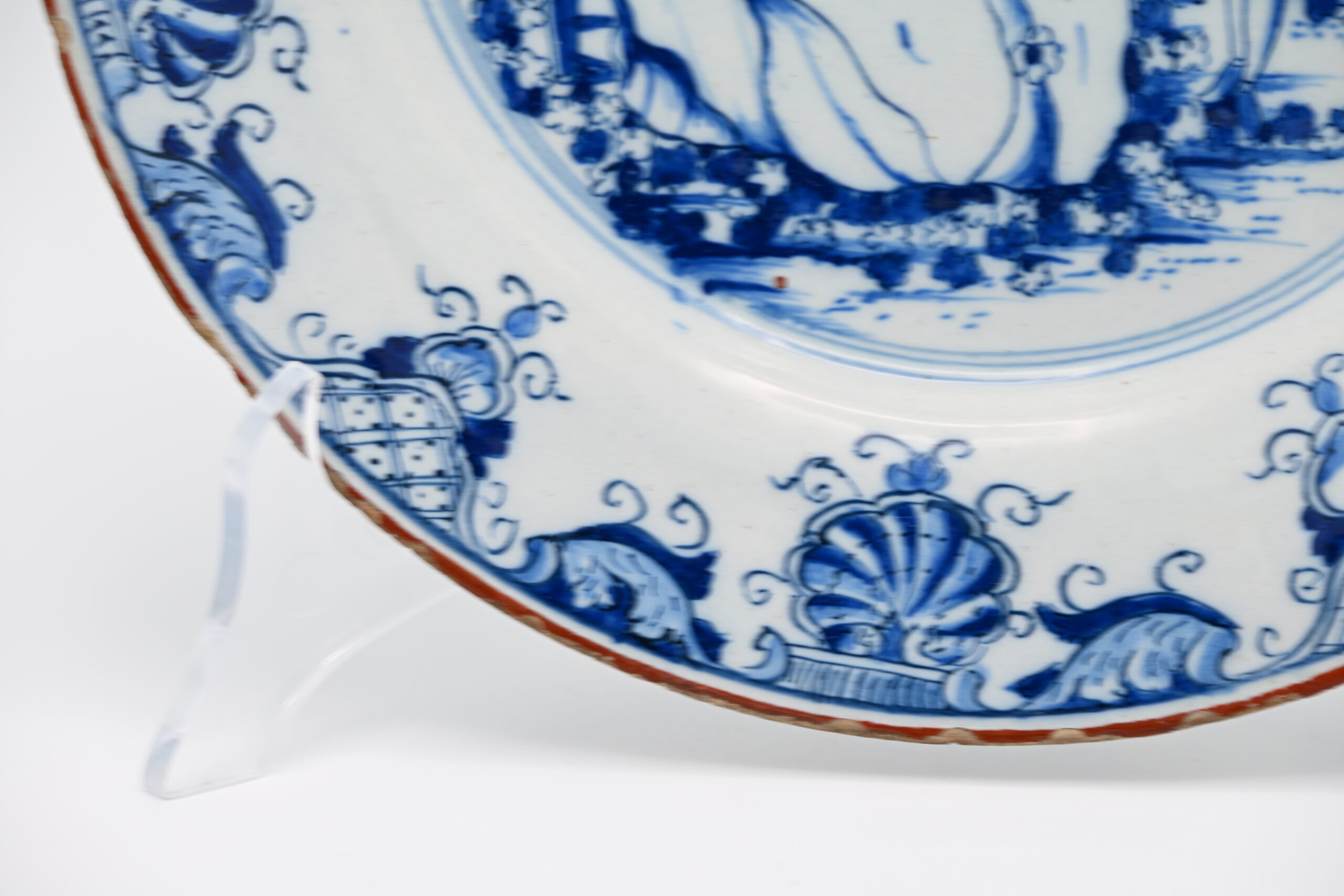
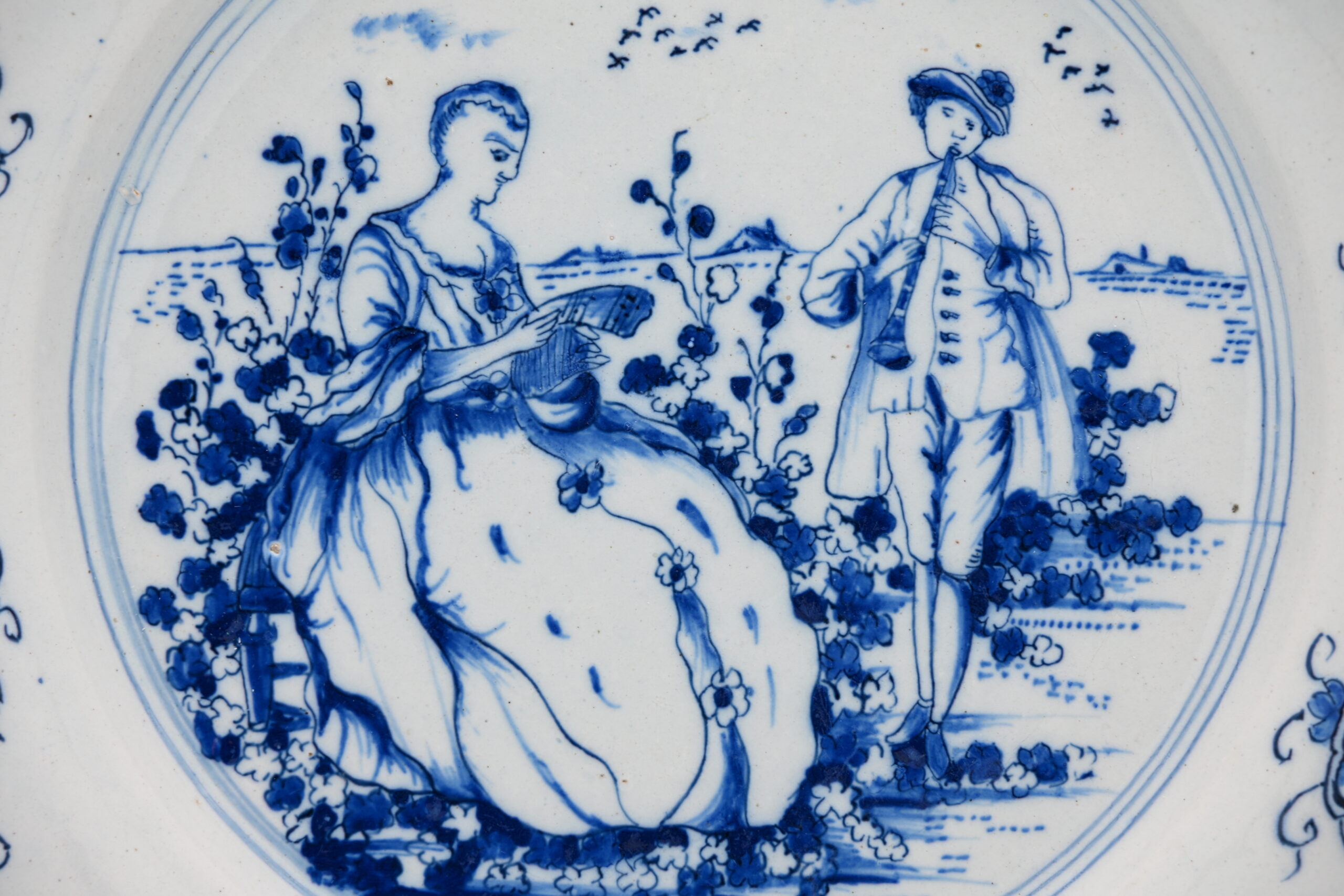
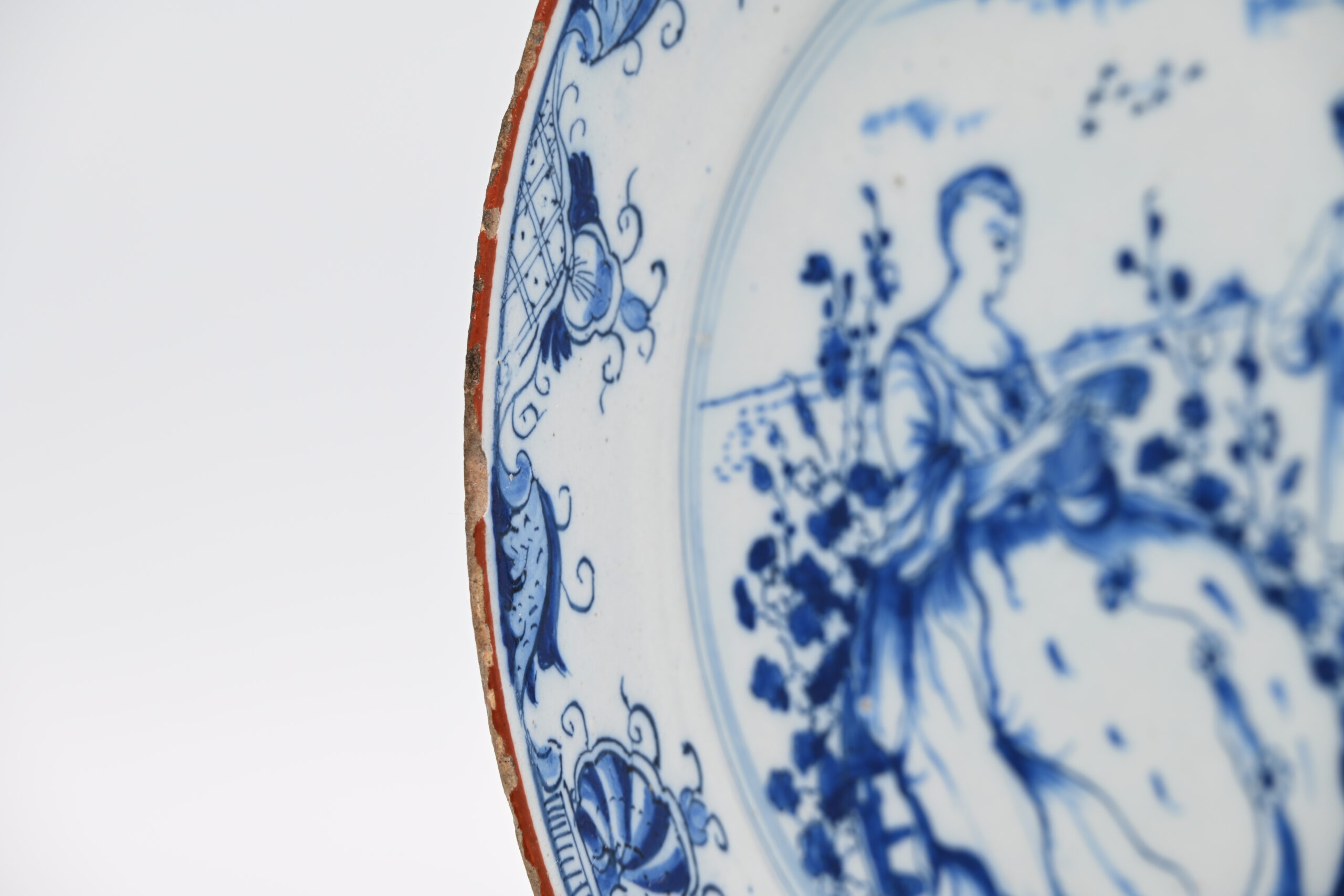
Antique Dutch Delft blue and white plate, painted with a pastoral scene depicting a gentleman playing a flute before a seated lady reading a letter. The subject belongs to the repertoire of Rococo genre scenes that became popular in Delft during the third quarter of the eighteenth century, reflecting contemporary taste for pastoral imagery derived from French prints and paintings.
The broad rim is finished with a brown edge, a feature inspired by Chinese export porcelain. Brown-edged Delftware became particularly fashionable and favored in the mid-eighteenth century as Delft potteries responded to the continued popularity of Chinese porcelain among European consumers, adapting both decorative motifs and colour schemes to the Dutch tin-glazed tradition.
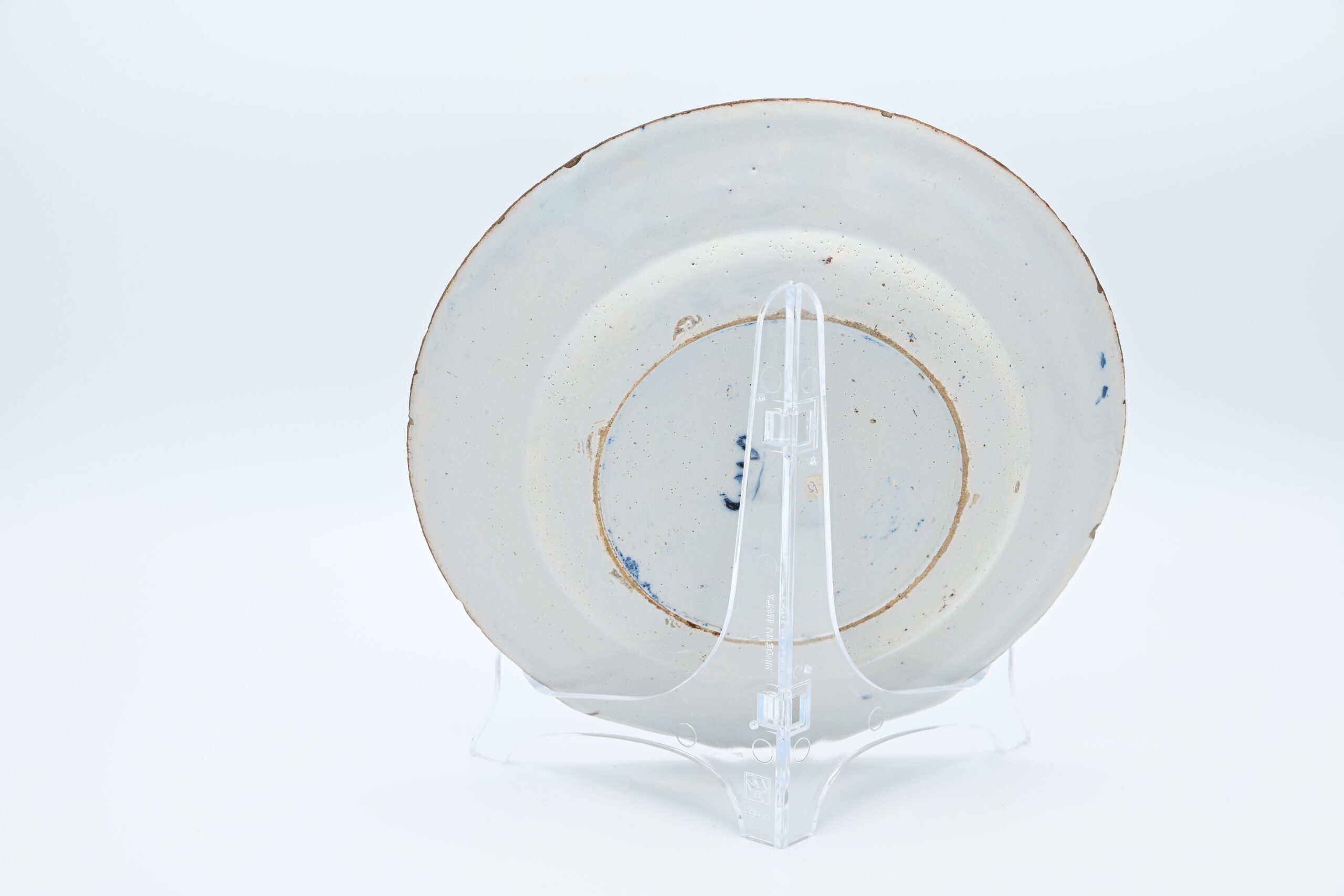
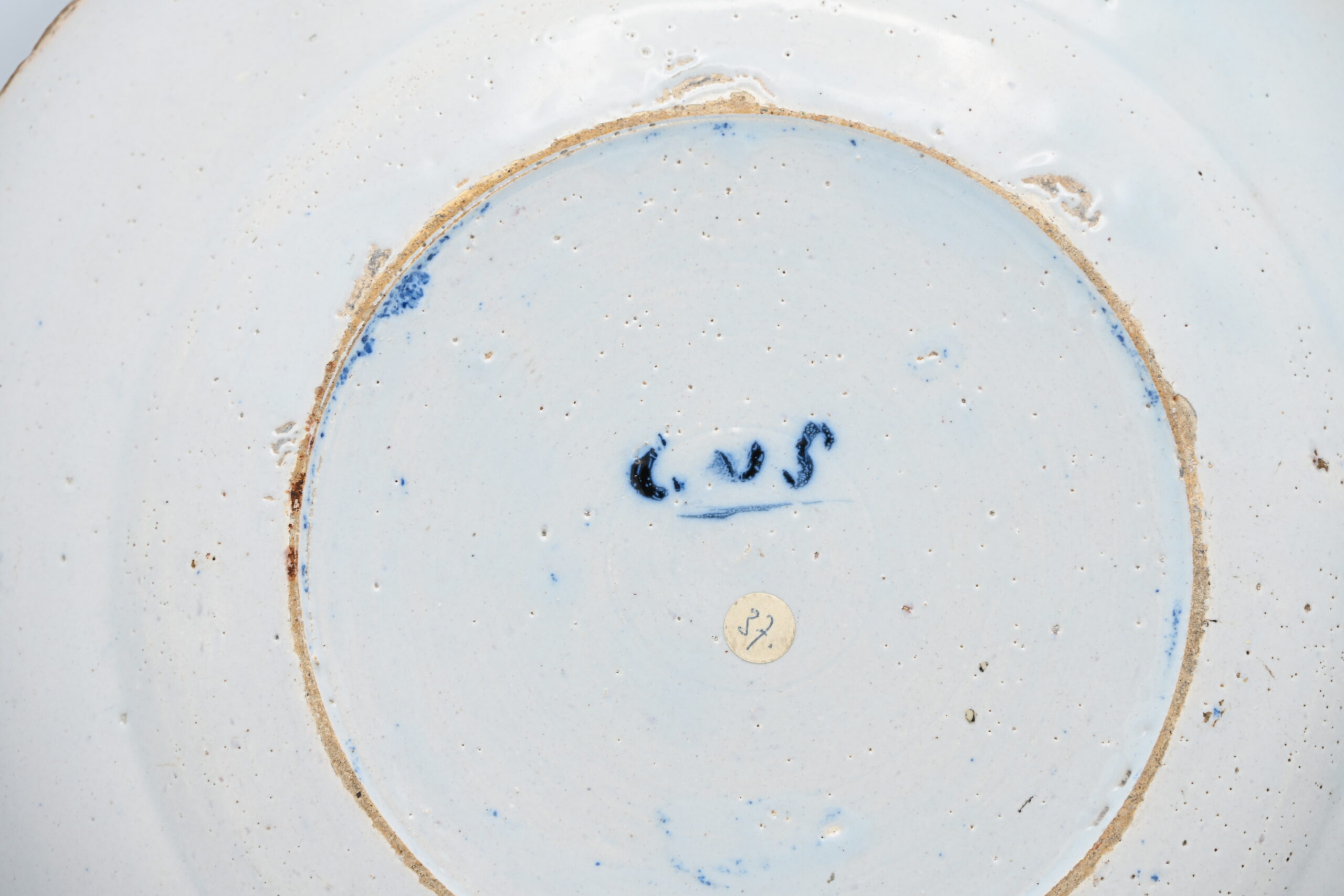
The reverse bears the painted GVS mark of Geertruy Verstelle, proprietor of Het Oude Moriaenshooft between 1761 and 1773.
Geertruy Verstelle occupies a distinctive place in the history of Delftware as one of the relatively few women to own and manage a Delft pottery in the eighteenth century. Following the death of her husband, Jacobus Halder, she assumed ownership of Het Oude Moriaenshooft in 1761, continuing the factory during a period of increasing competition from English creamware and imported porcelain. Like several widows active in the Delft ceramics trade, Verstelle directed both the commercial and artistic operations of the pottery.
What distinguishes Verstelle from many of her contemporaries is that she marked her production with her own initials, GVS (Geertruy Verstelle), rather than continuing to use her late husband’s mark or identifying herself simply as a widow (weduwe). This deliberate choice visibly asserted her own identity as proprietor and is an uncommon and significant feature in eighteenth-century Delftware. Pieces bearing her initials are therefore not only attributable to a well-defined period of production but also represent the independent leadership of one of the few documented female factory owners in Delft.
Condition:
Very good condition: Only slight wear consistent with age.
Literature:
C.H. de Jonge, Delfts Aardewerk (1965);
J.D. van Dam, Delftse Porceleyne (2004)
diameter: 23 centimeters