Polychrome Delftware Wall Plaque with Grotesque Ornament and Flower Vase, Delft, circa 1750
€4,500.00
ABOUT THIS ITEM
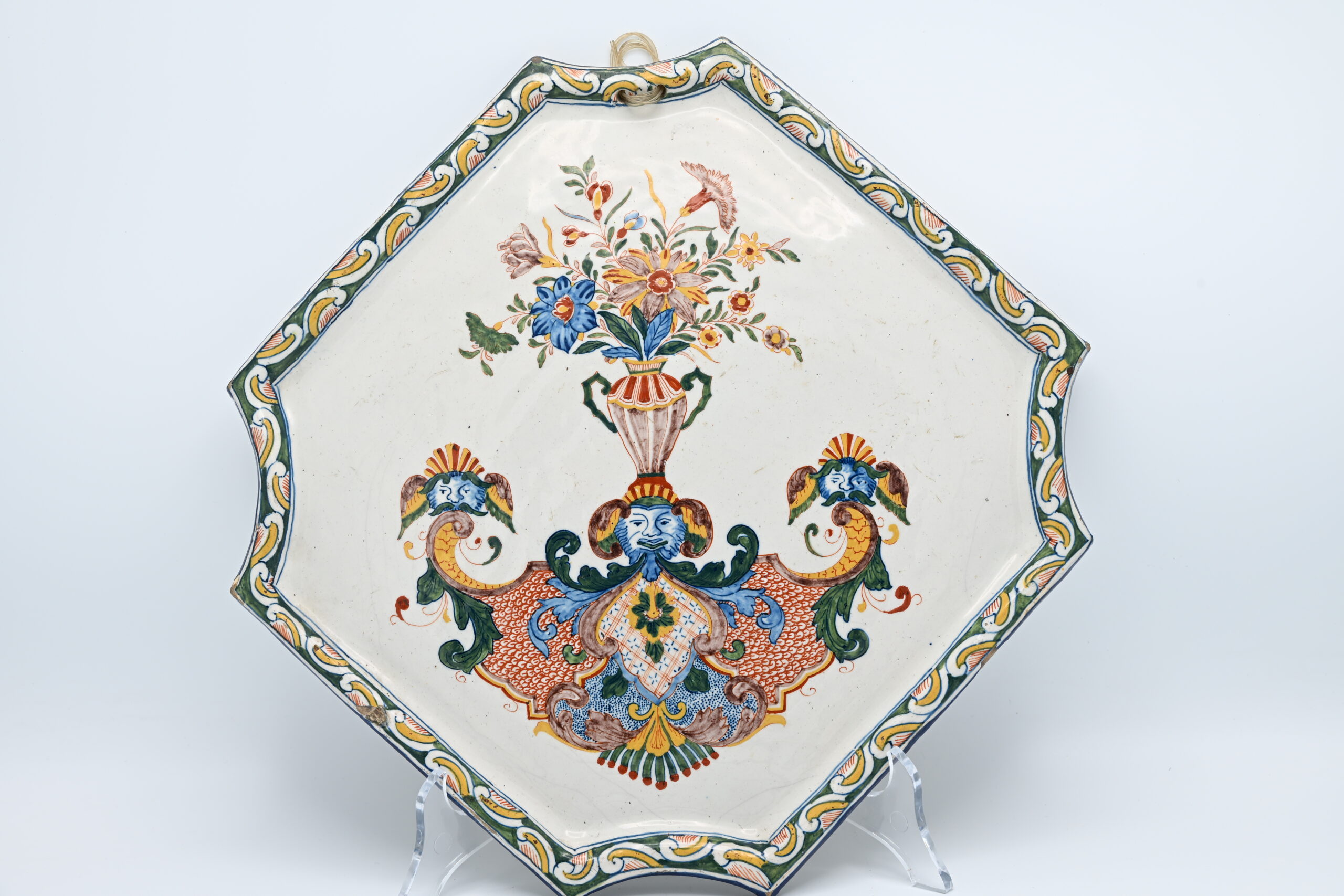
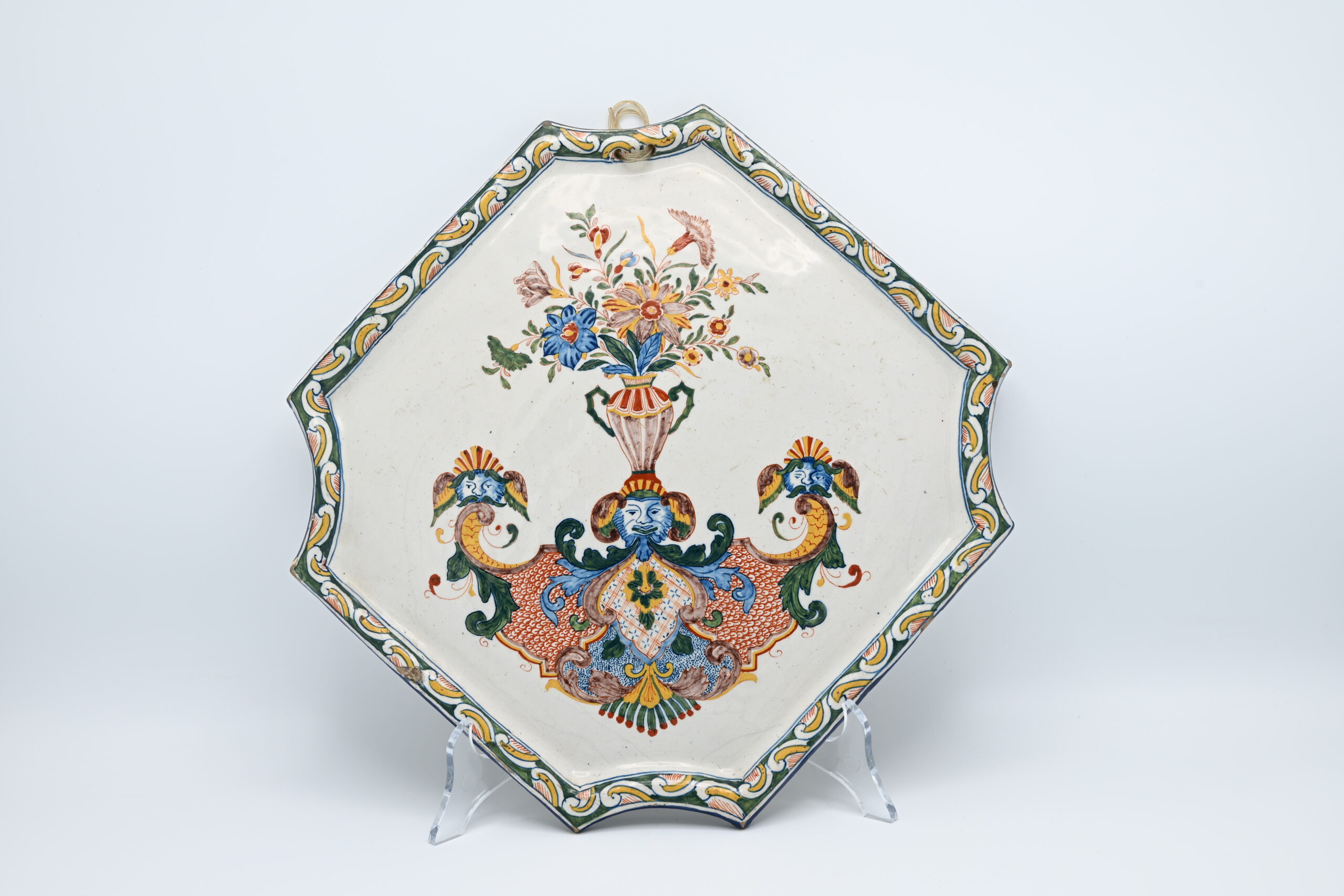
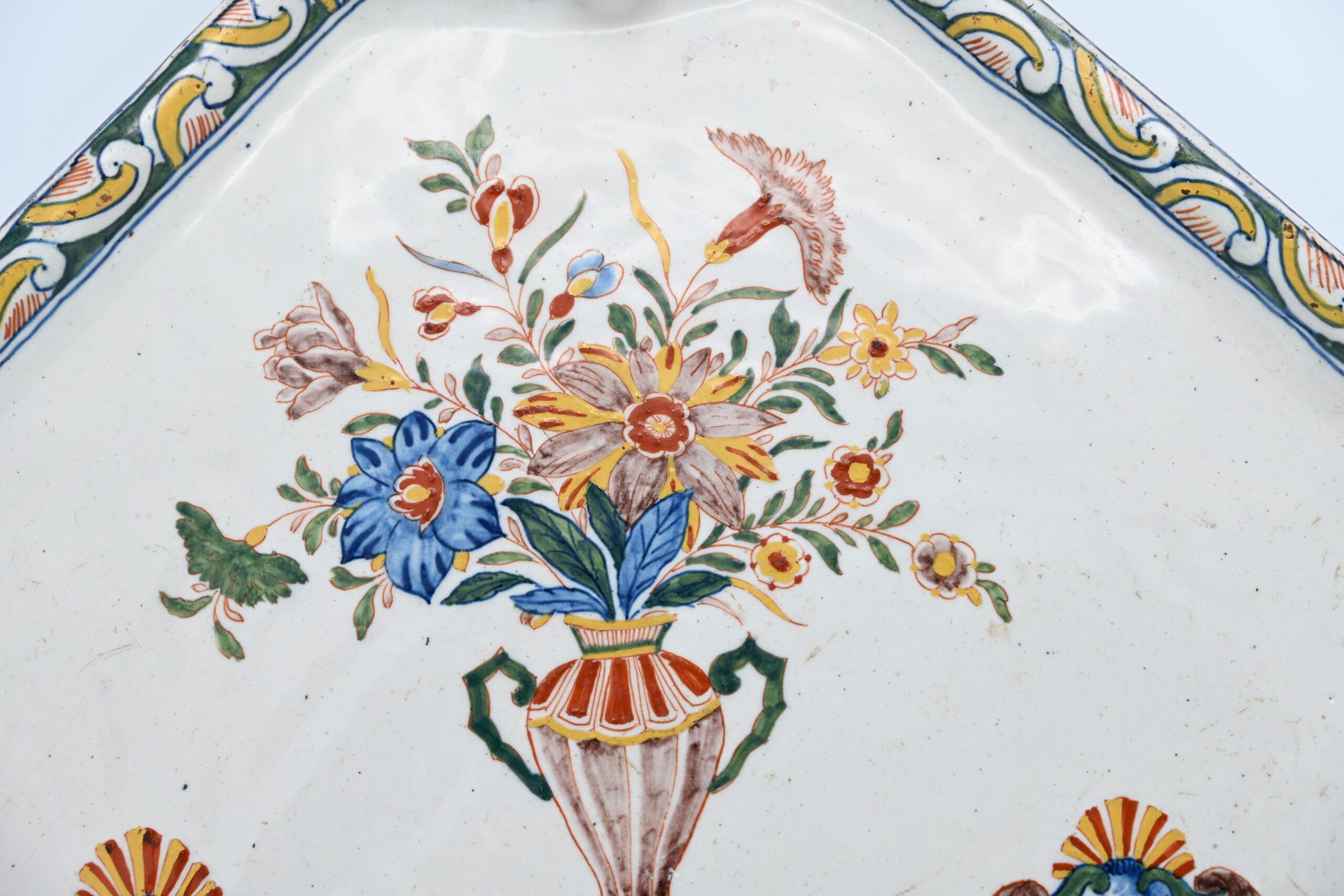
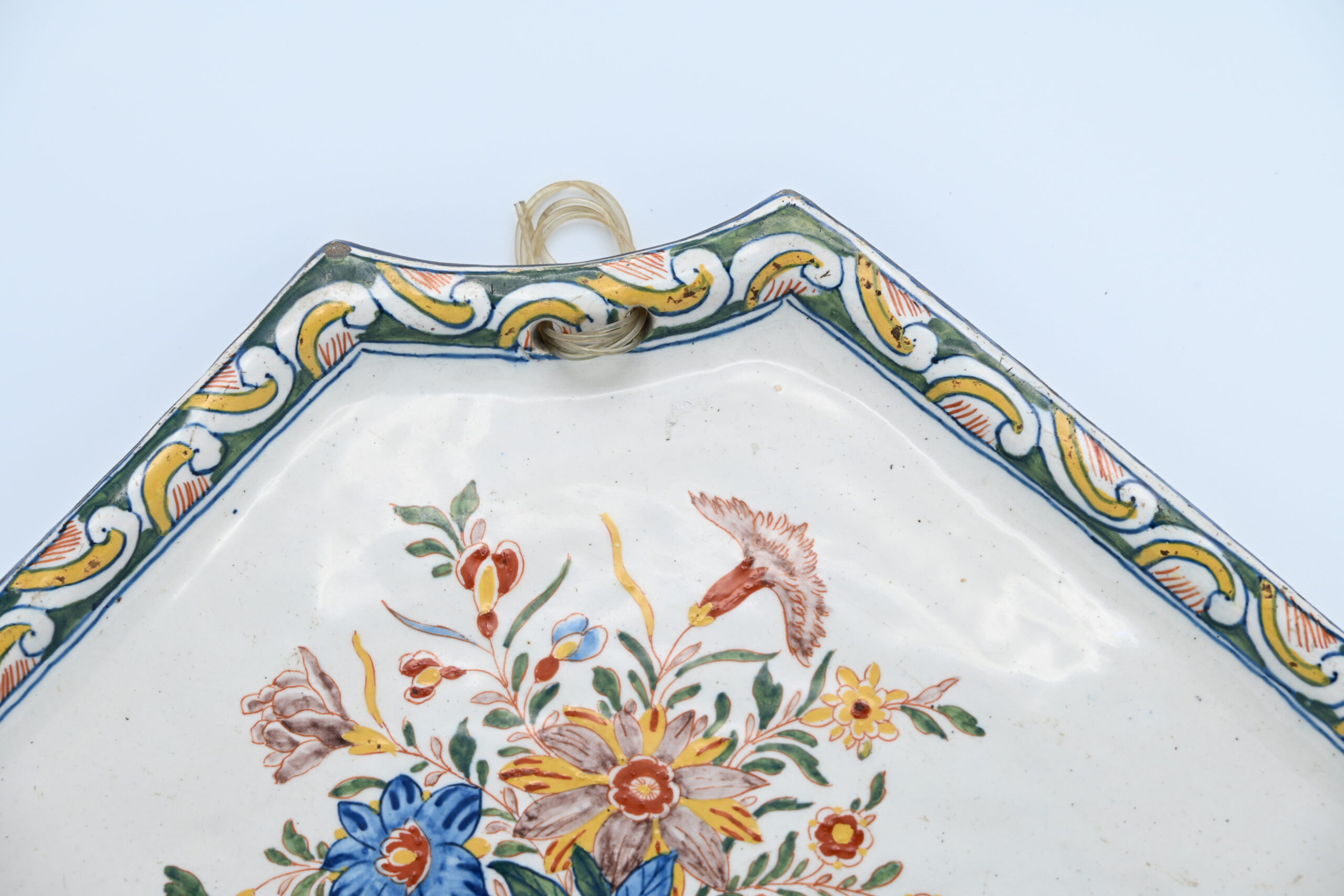
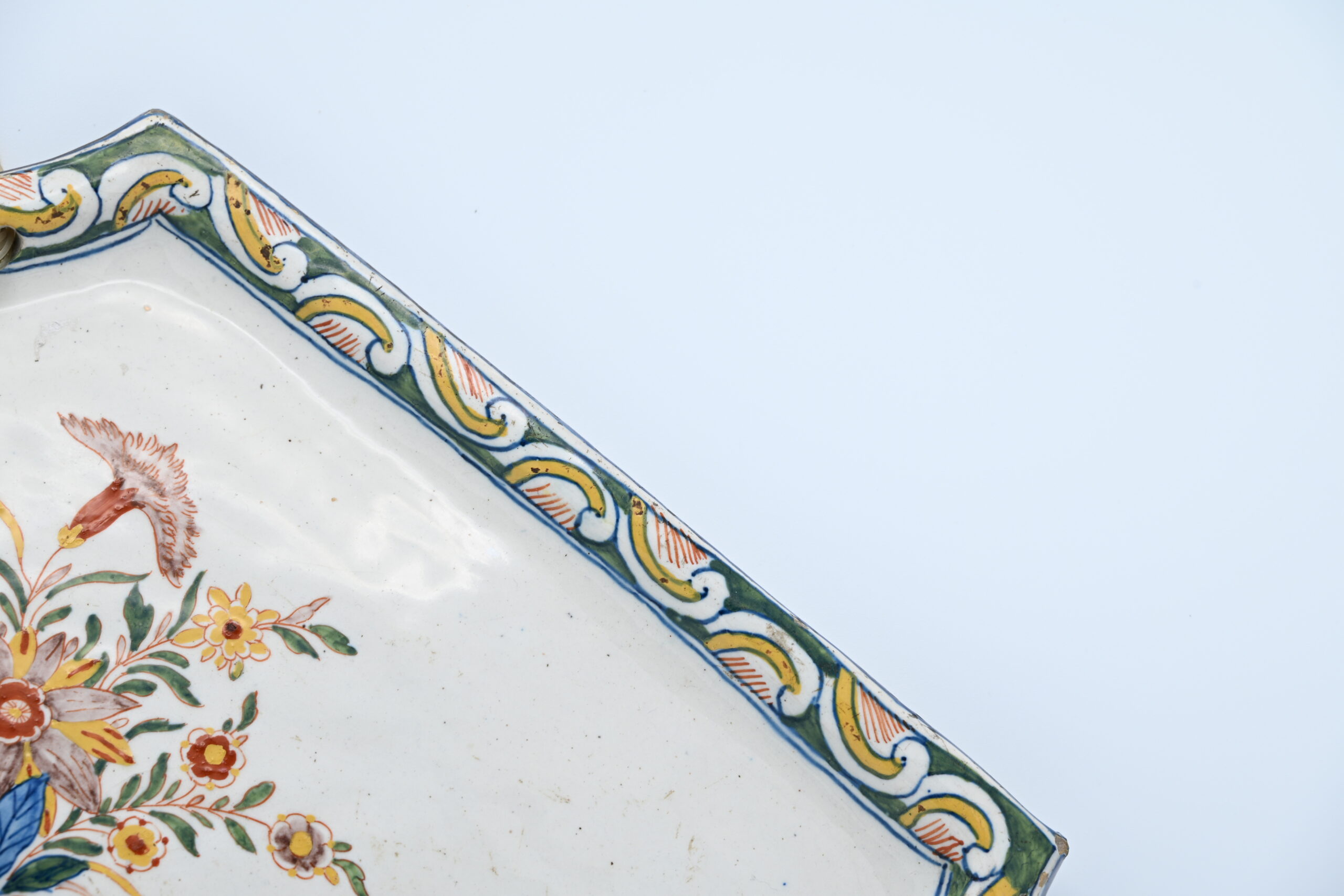
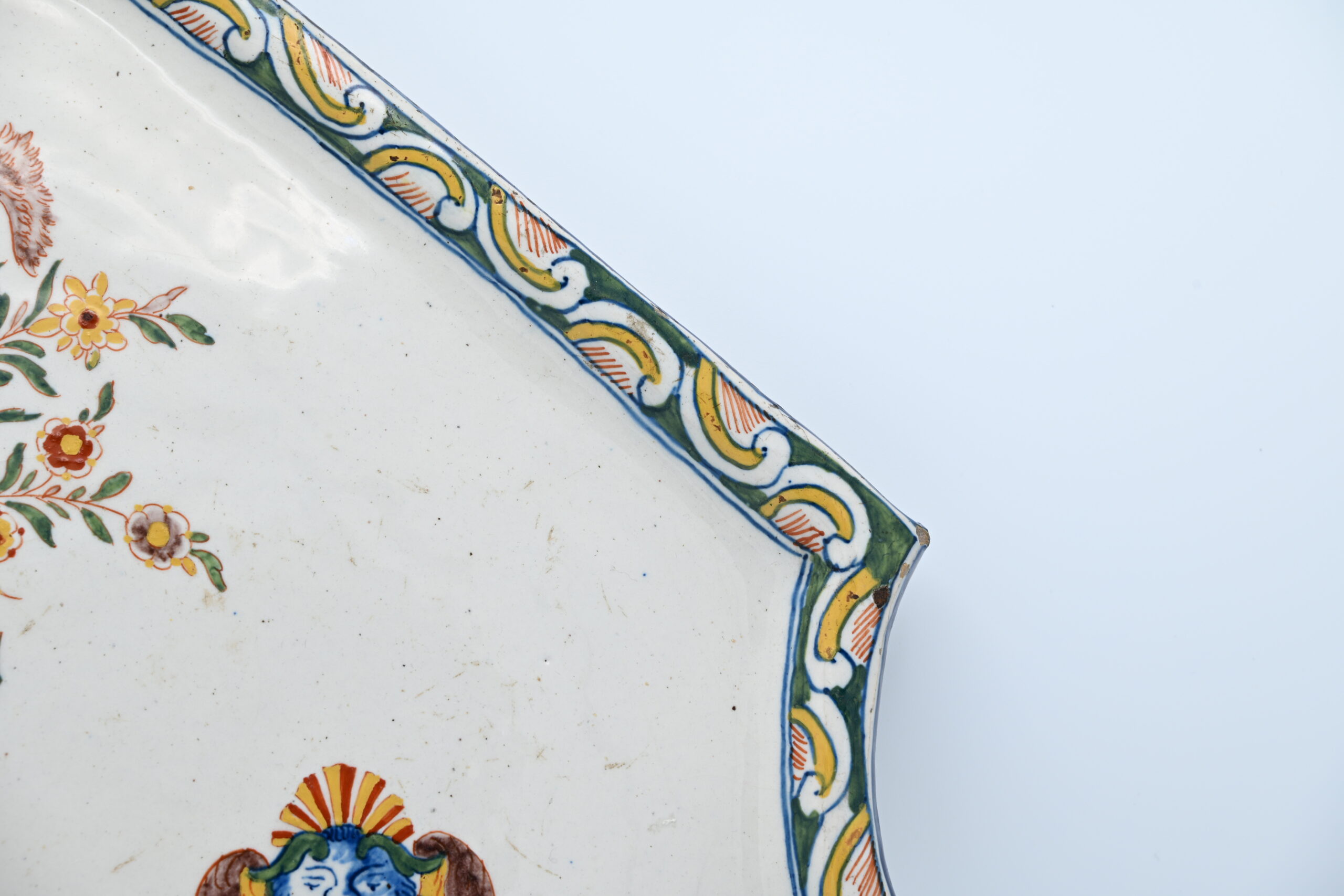
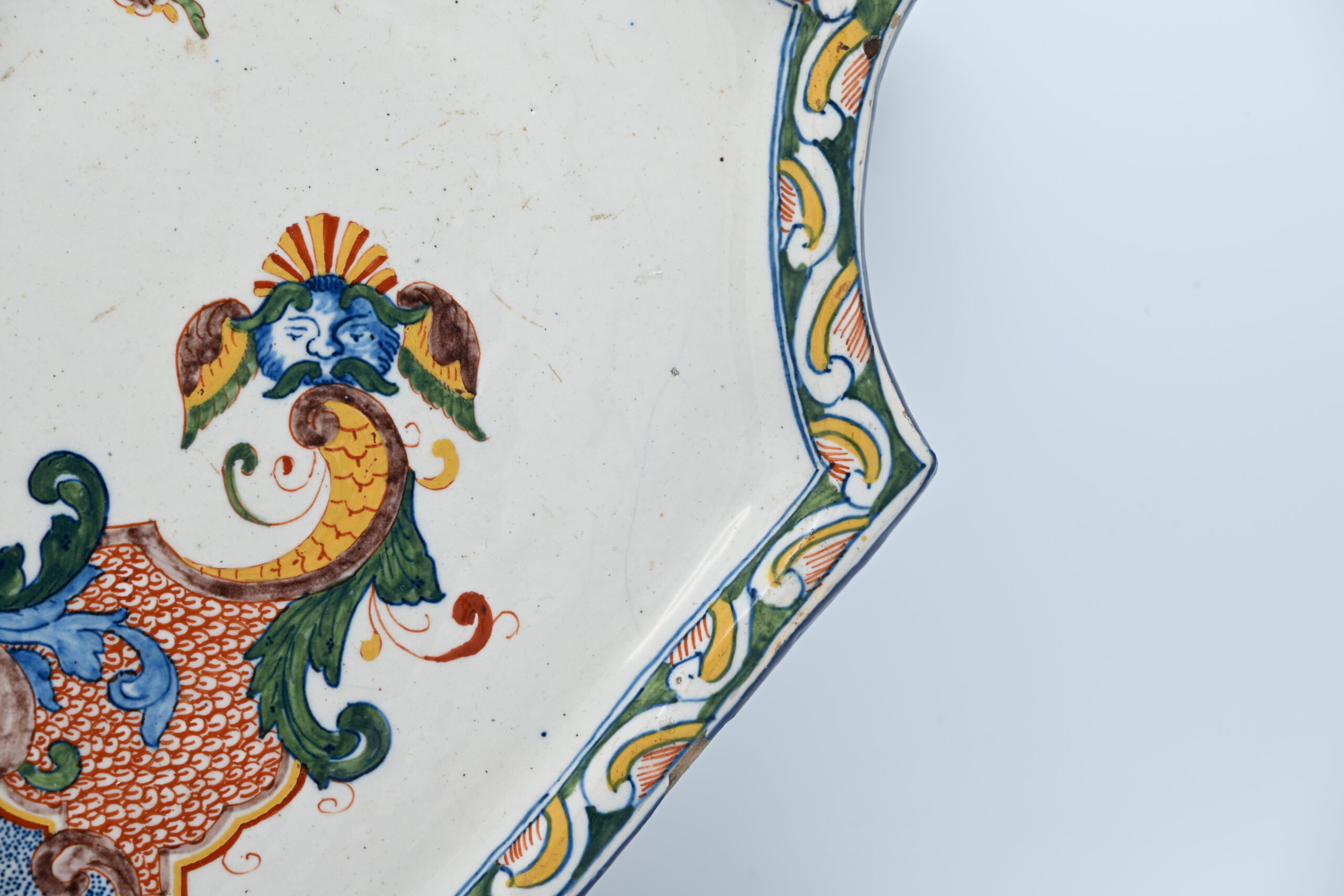
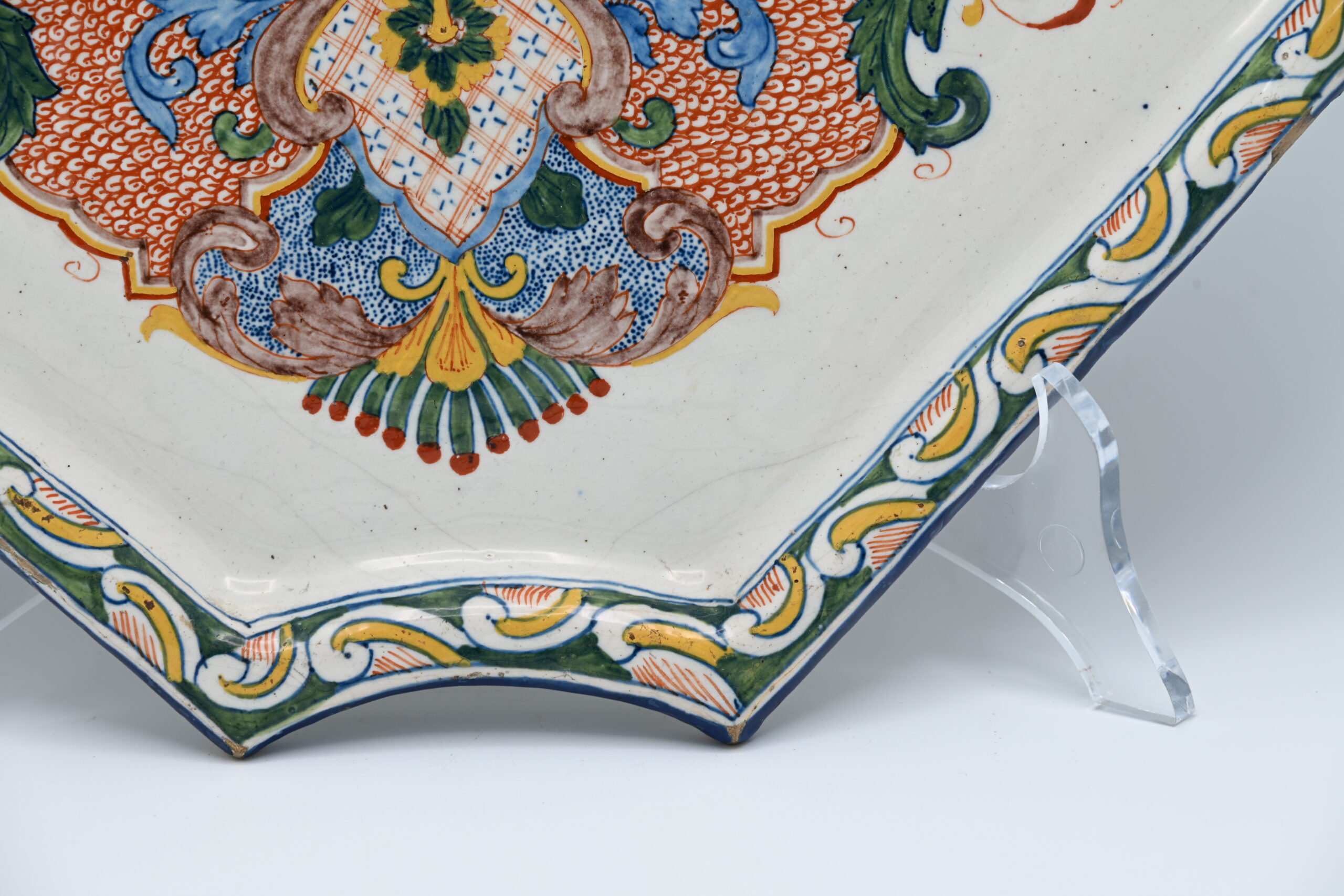
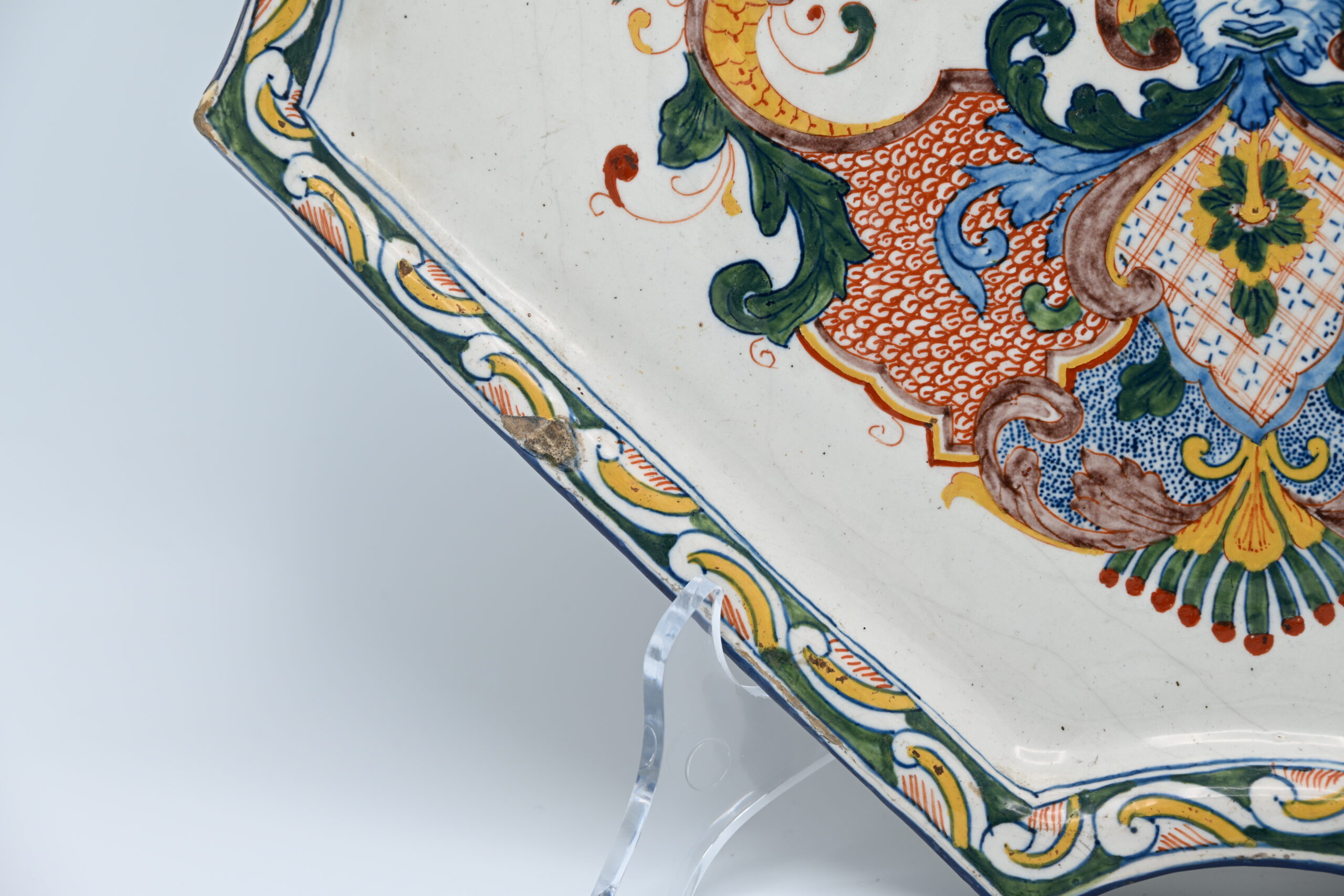
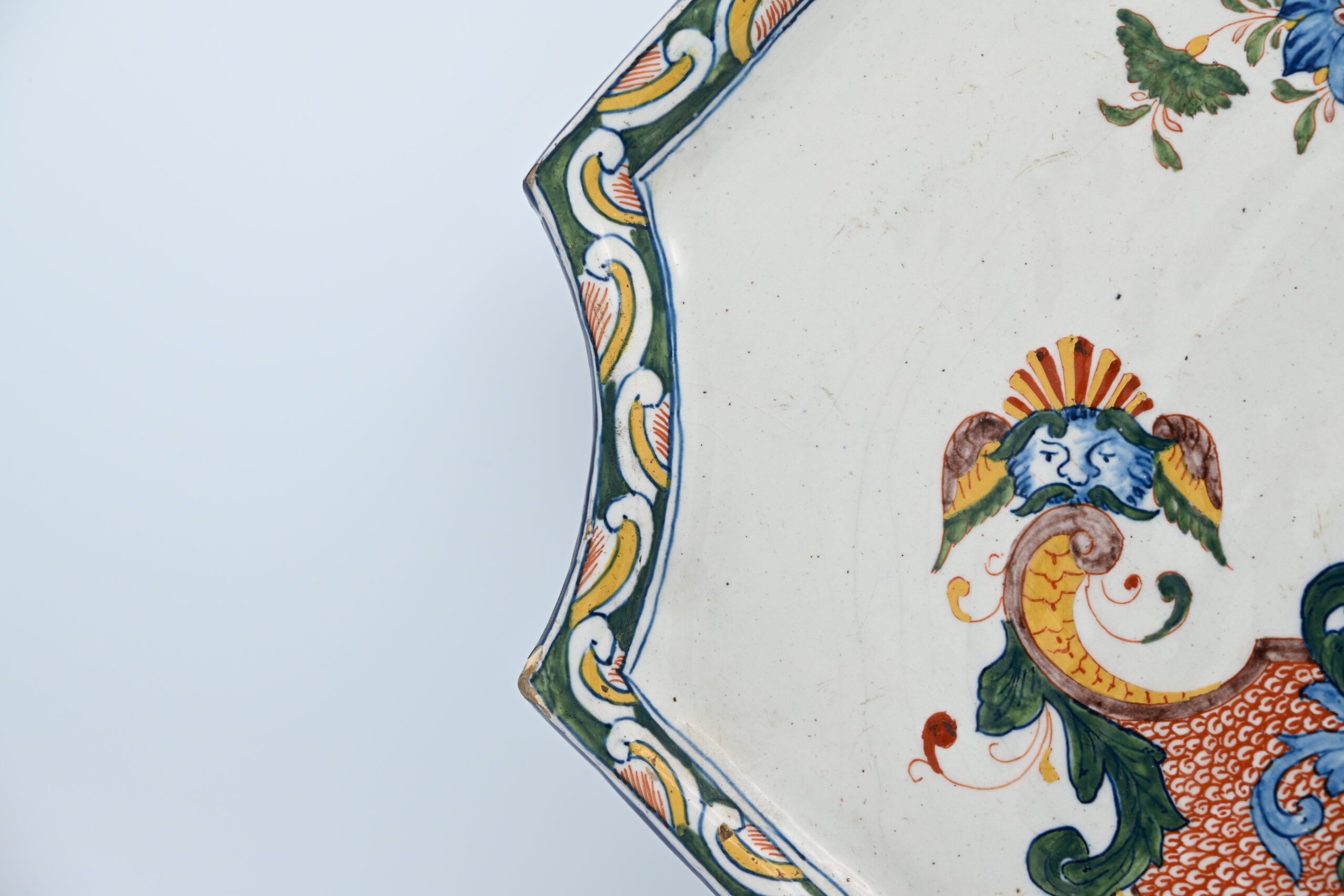
This antique eighteenth-century Dutch Delftware wall plaque is made of tin-glazed earthenware, also known as Delft faience. The shaped ceramic plaque is painted in blue, green, yellow, iron-red and manganese. Its raised, self-framing border is outlined in blue and decorated with continuous scrolling ornament against a green ground.
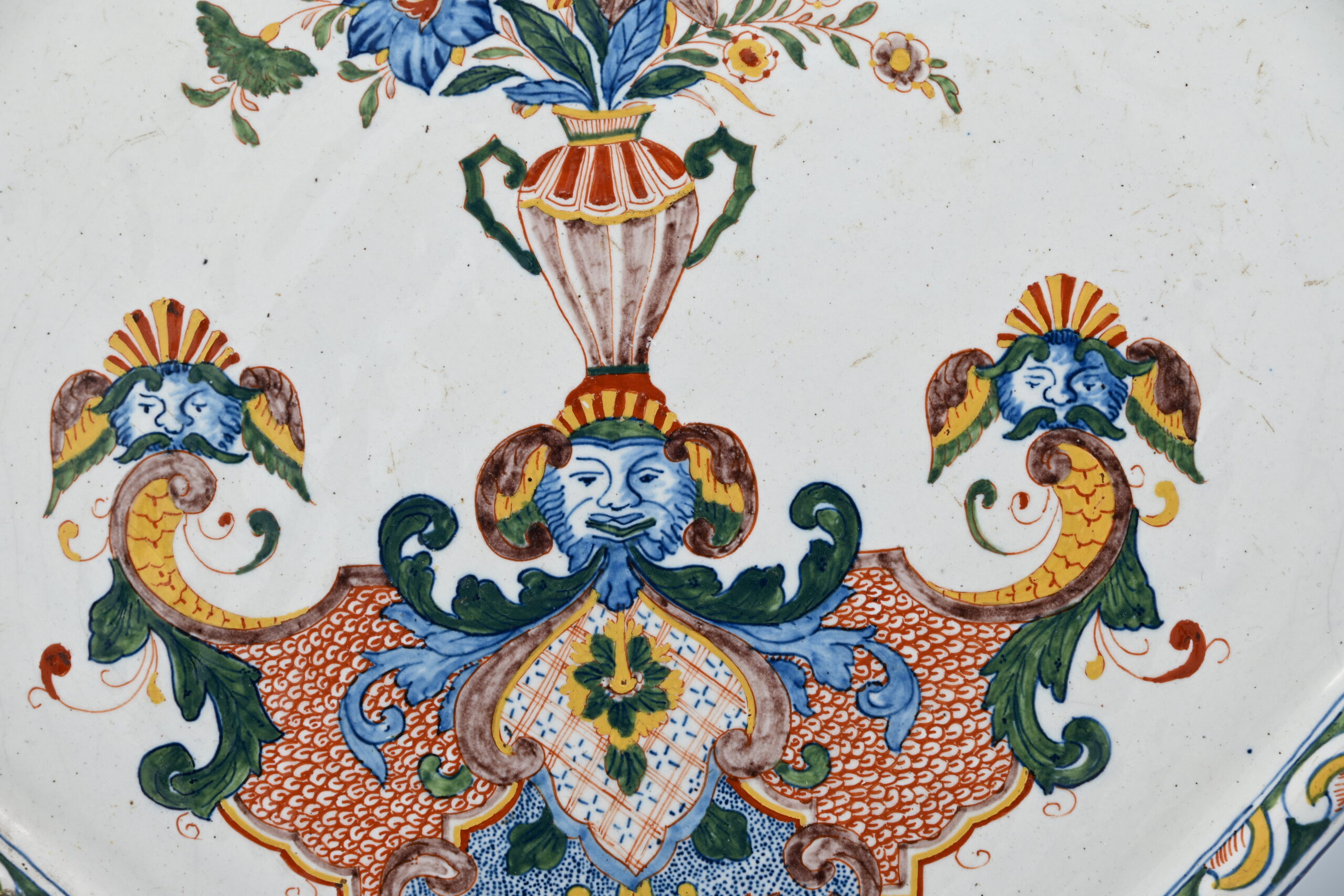
The centre is painted with an elaborate symmetrical fantasy ornament composed of three winged masks, volutes, foliage, shell motifs and scale-patterned fields. The central mask supports a two-handled vase filled with flowers, with a bird in flight above the bouquet. The plaque is pierced at the top for suspension and was made specifically for wall display.
The composition belongs to the broader tradition of French-inspired grotesque ornament that circulated in the Dutch Republic through prints by designers such as Jean Bérain and Daniel Marot. By the mid-eighteenth century, Delft painters had adapted this ornamental vocabulary freely, combining masks, scrolls and fantastical forms into highly decorative compositions.
Delftware wall plaques held a distinct place within eighteenth-century Dutch interiors. In contemporary household inventories, they were sometimes recorded as porceleine schilderijen, or “porcelain paintings”, reflecting their function as ceramic counterparts to paintings on panel, canvas or copper. During the eighteenth century, Delft potters increasingly produced plaques in moulds with shaped outlines and raised borders, creating complete, self-framed decorative objects.
With its unusual grotesque decoration, strong polychrome palette and pronounced shaped border, this antique Delft plaque is a distinctive example of Dutch decorative ceramics from around 1750.
Provenance
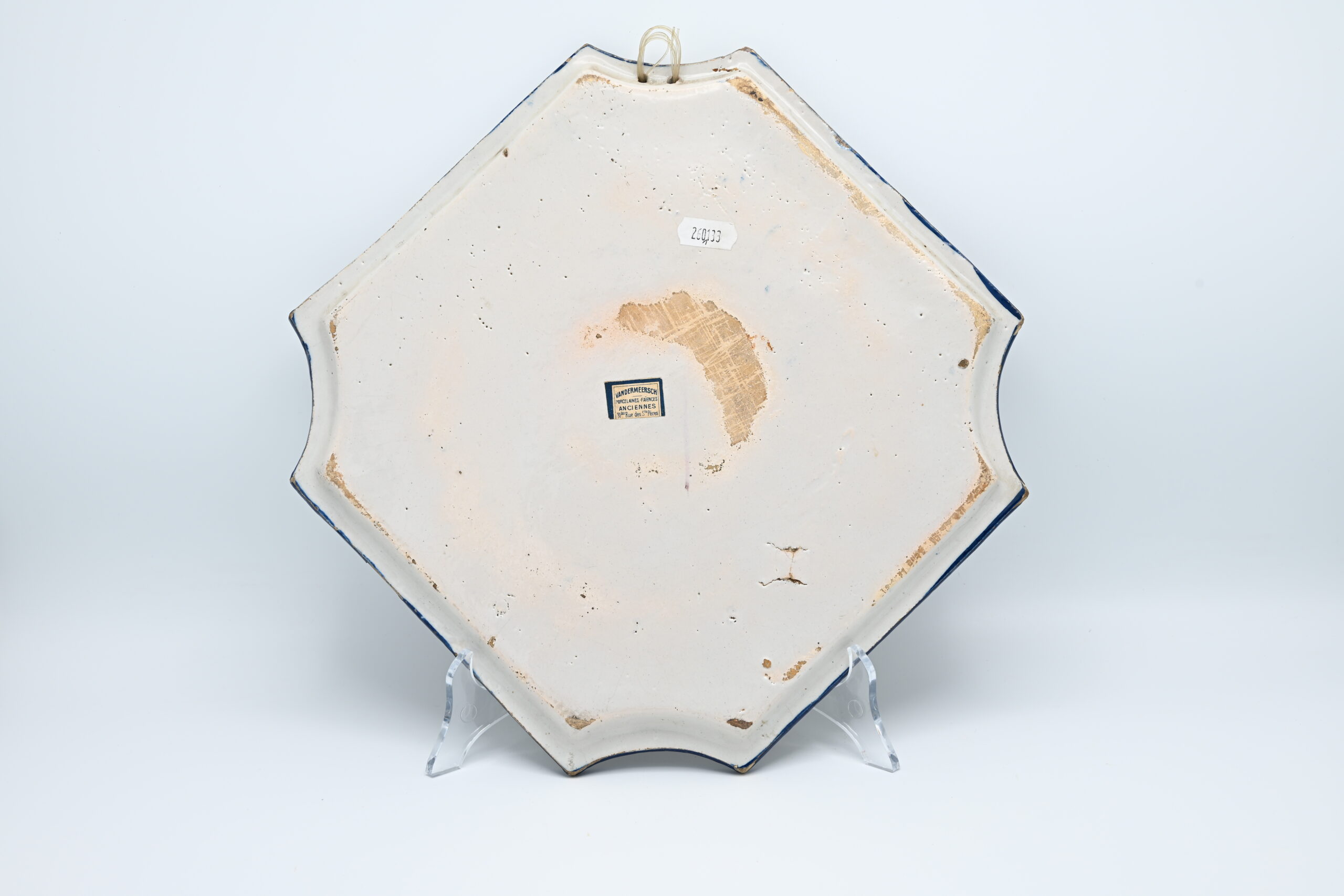
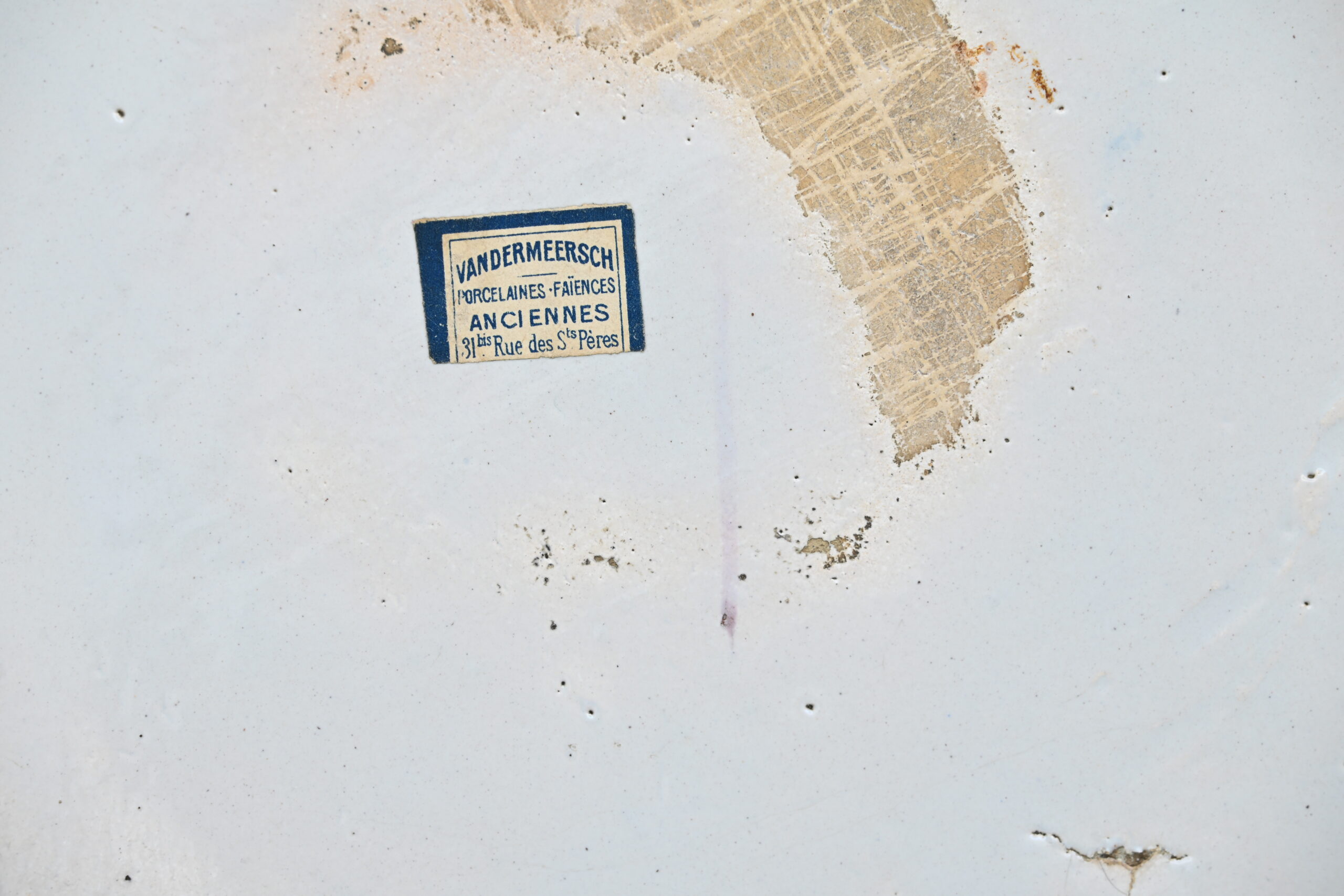
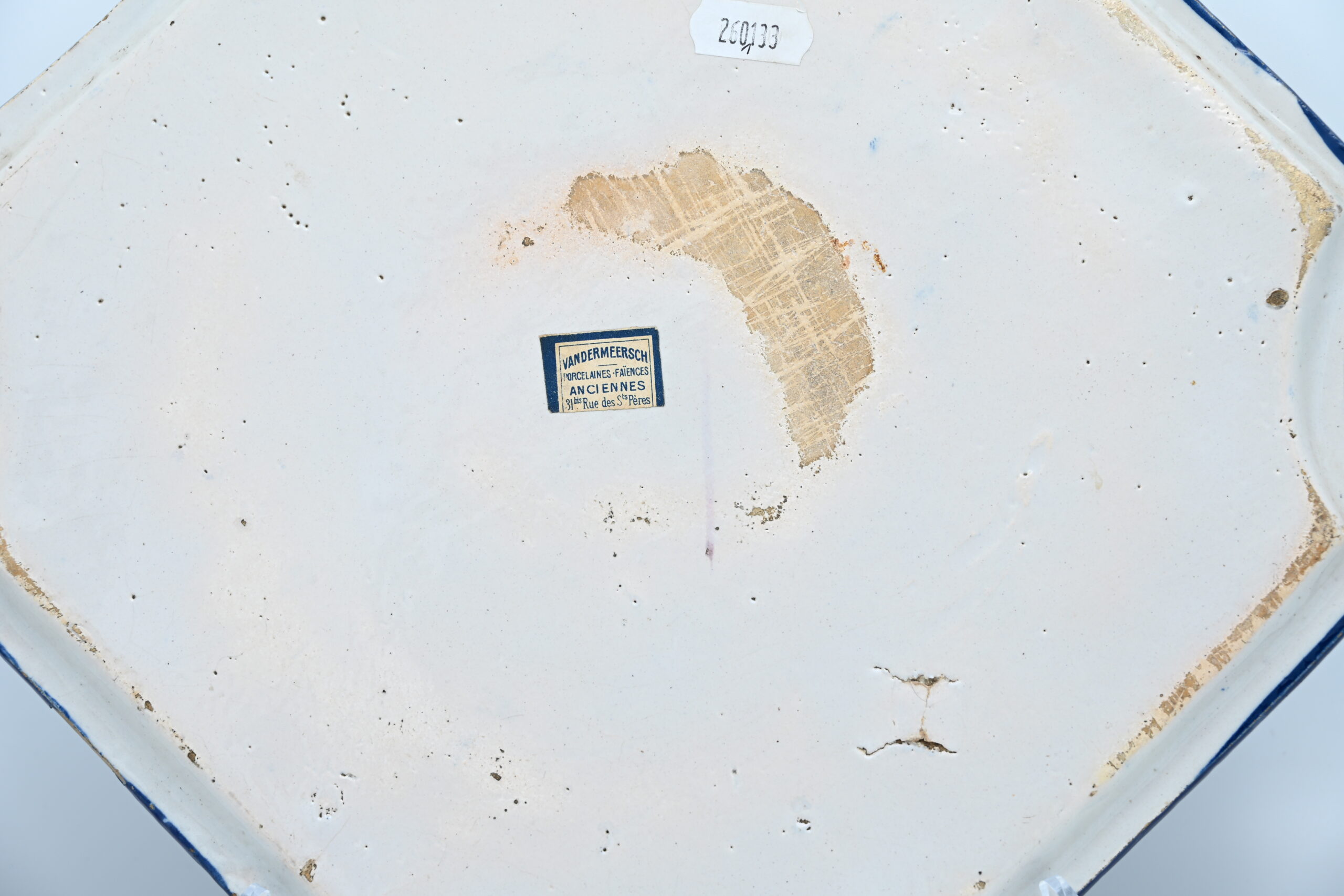
The reverse retains an early label from Galerie A. Vandermeersch at 31 bis rue des Saints-Pères in Paris. The gallery was founded at this address in 1880 by Louis Auguste Vandermeersch (1861–1925), a restorer and antique dealer who specialised in early European faience and porcelain. Vandermeersch became a respected name in the international ceramics trade and supplied important private collectors, including Béatrice Ephrussi de Rothschild.
The business remained in the Vandermeersch family for successive generations and established a particular reputation for French and European ceramics. In October 1938, the gallery moved from the rue des Saints-Pères to 23 quai Voltaire. The address on the surviving label therefore dates the plaque’s association with Vandermeersch to the period between 1880 and 1938.
Condition
Very good condition. Some usual wear to the glaze consistent with age and material
Size
31 x 31 cm