18th-Century Hispano-Moresque Dish with Floral Decoration of a Carnation, Manises
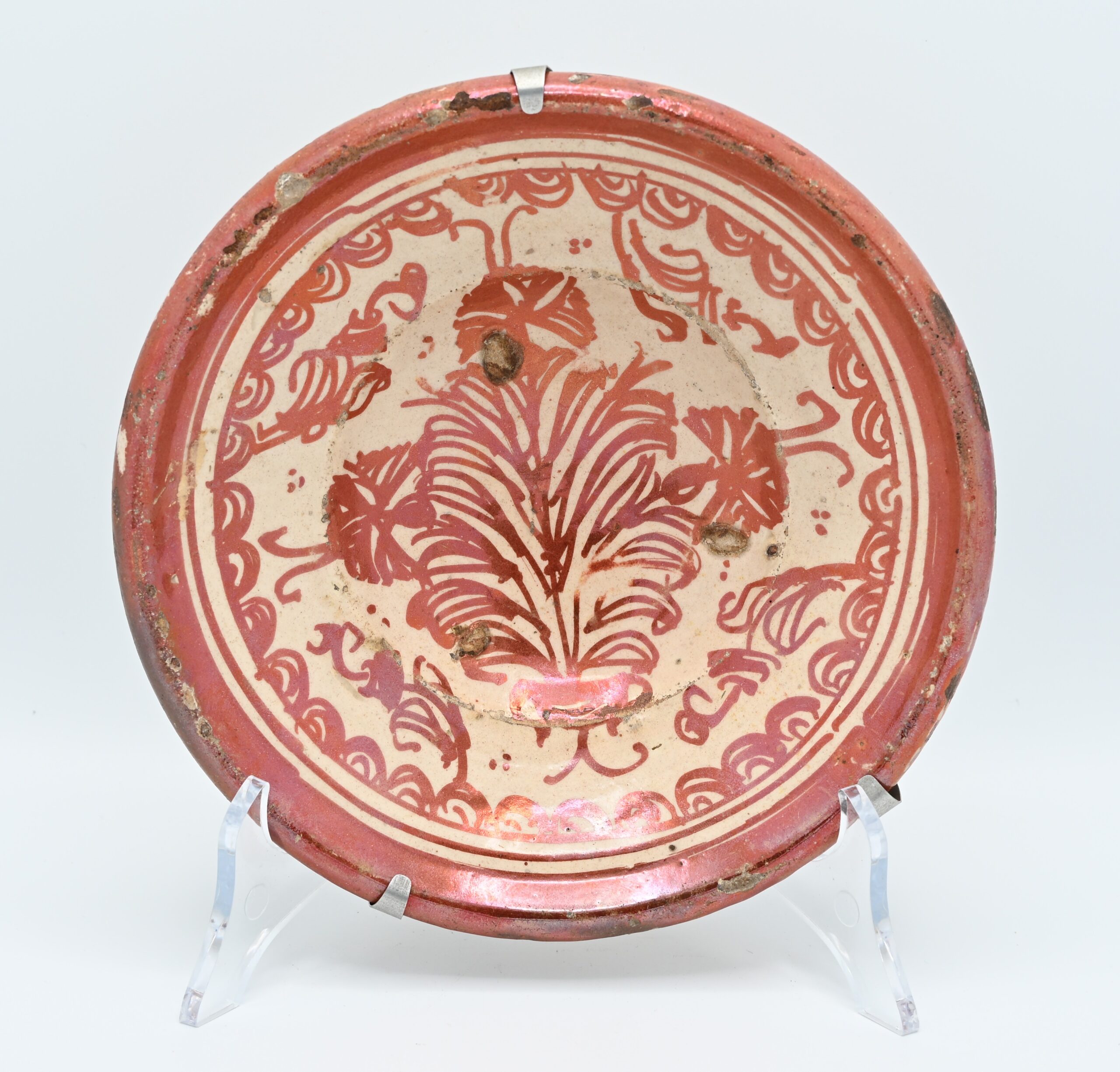
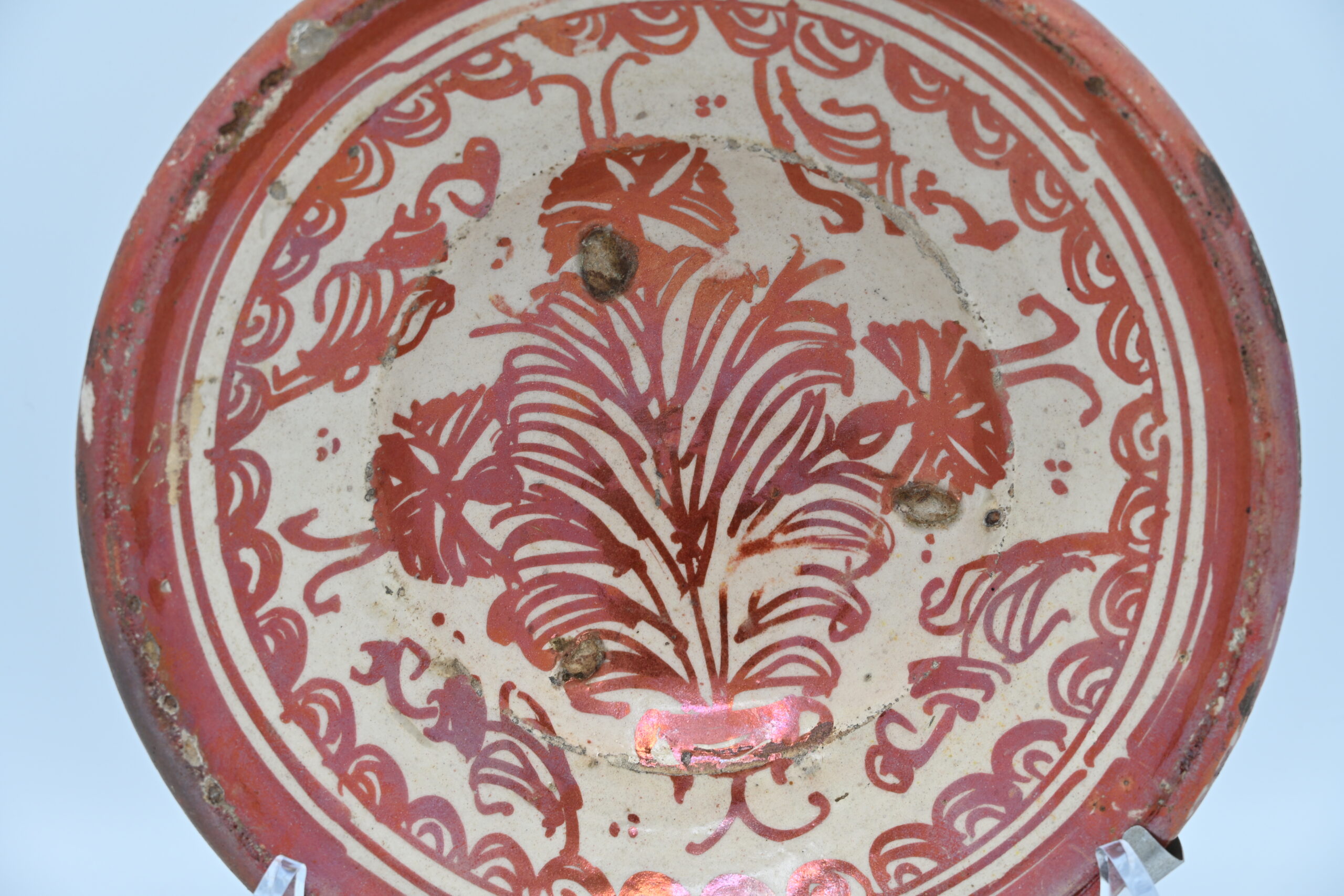
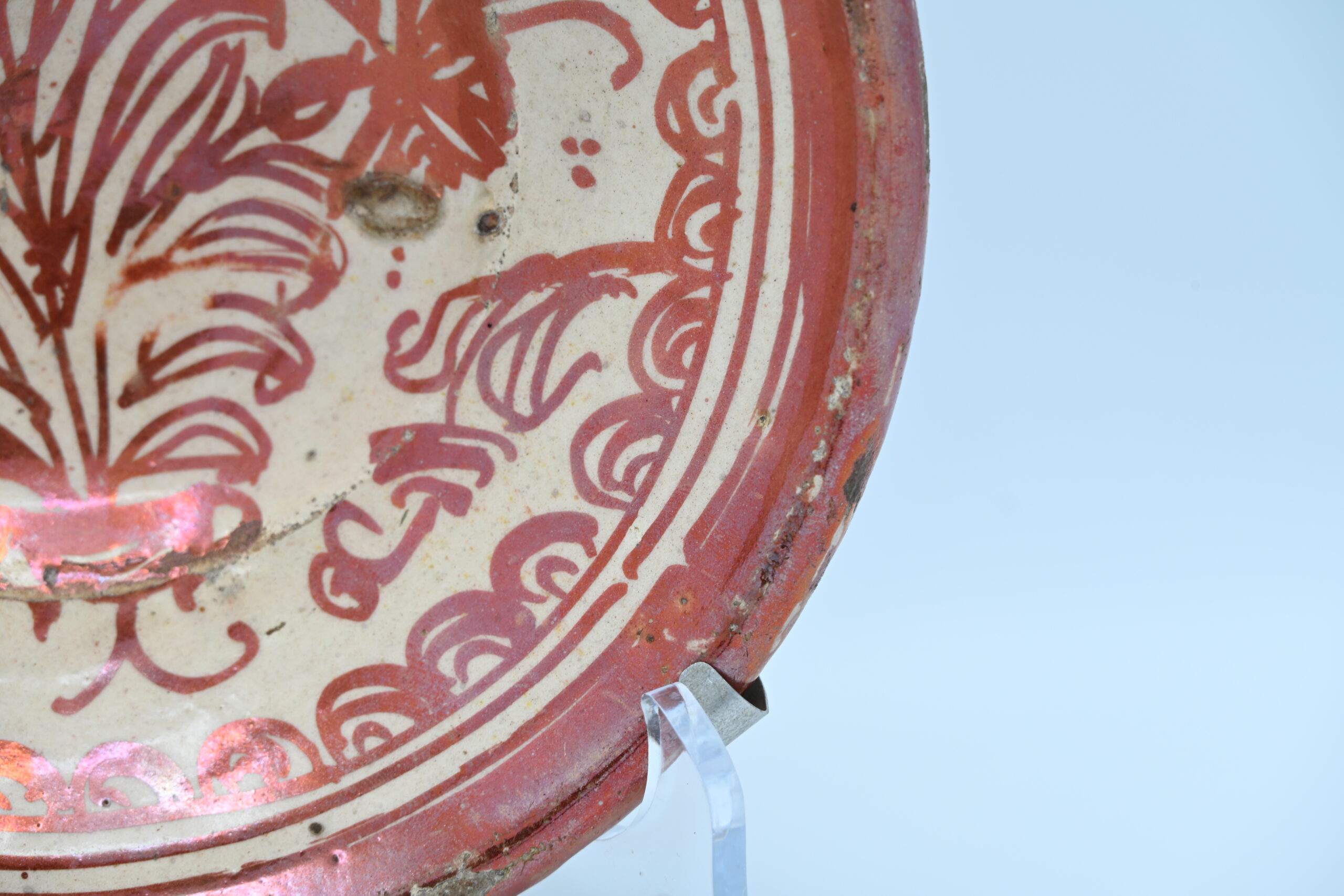
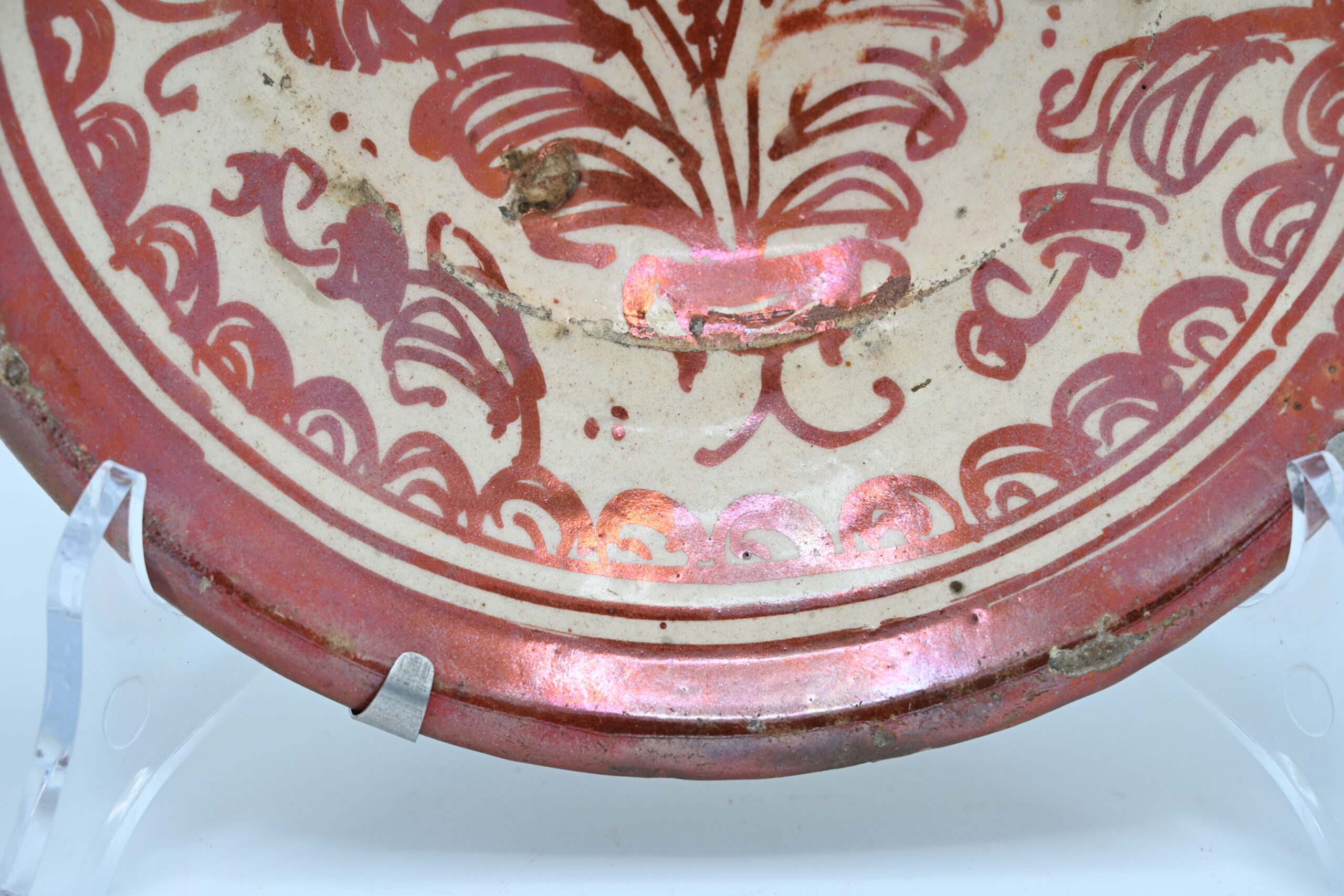
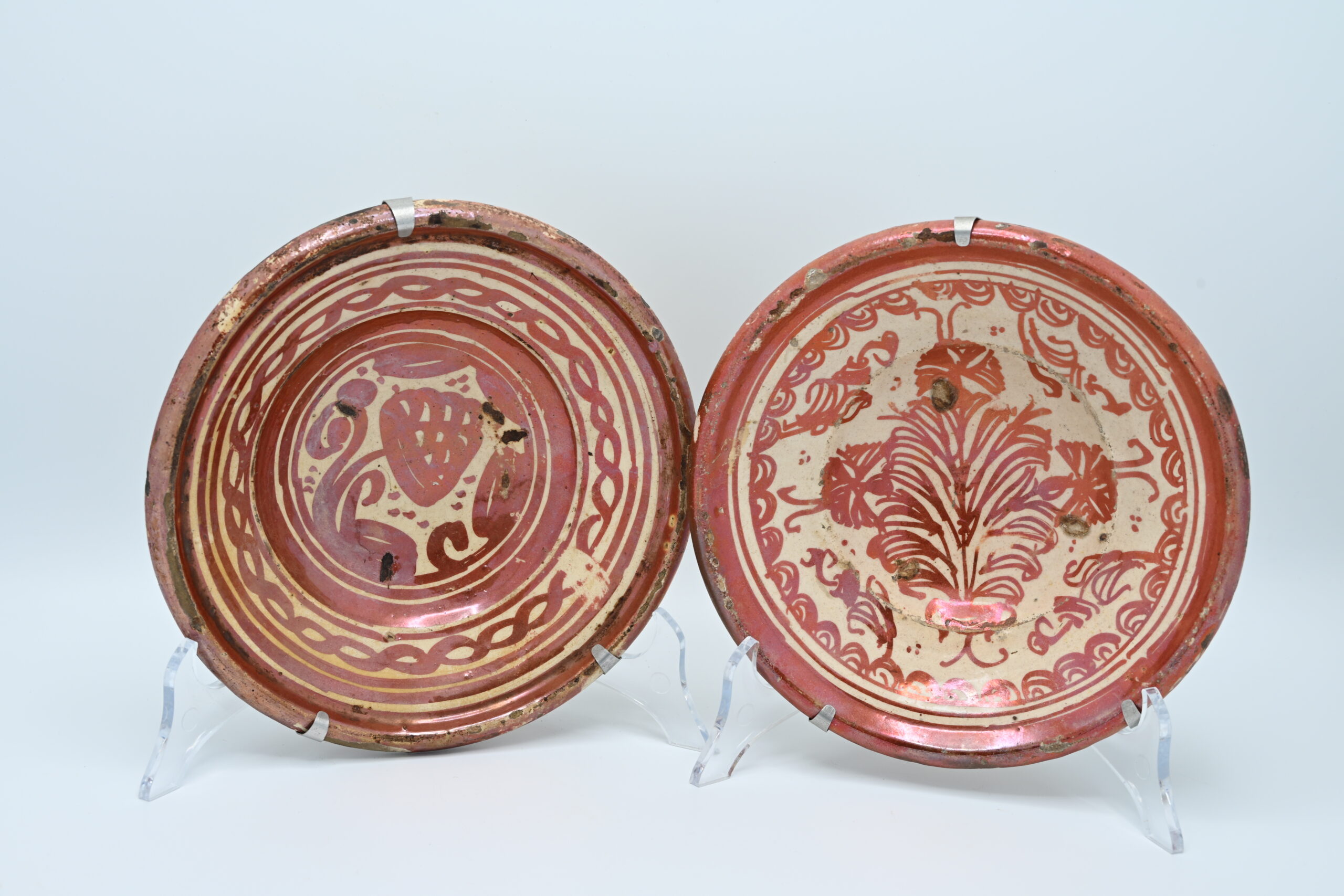
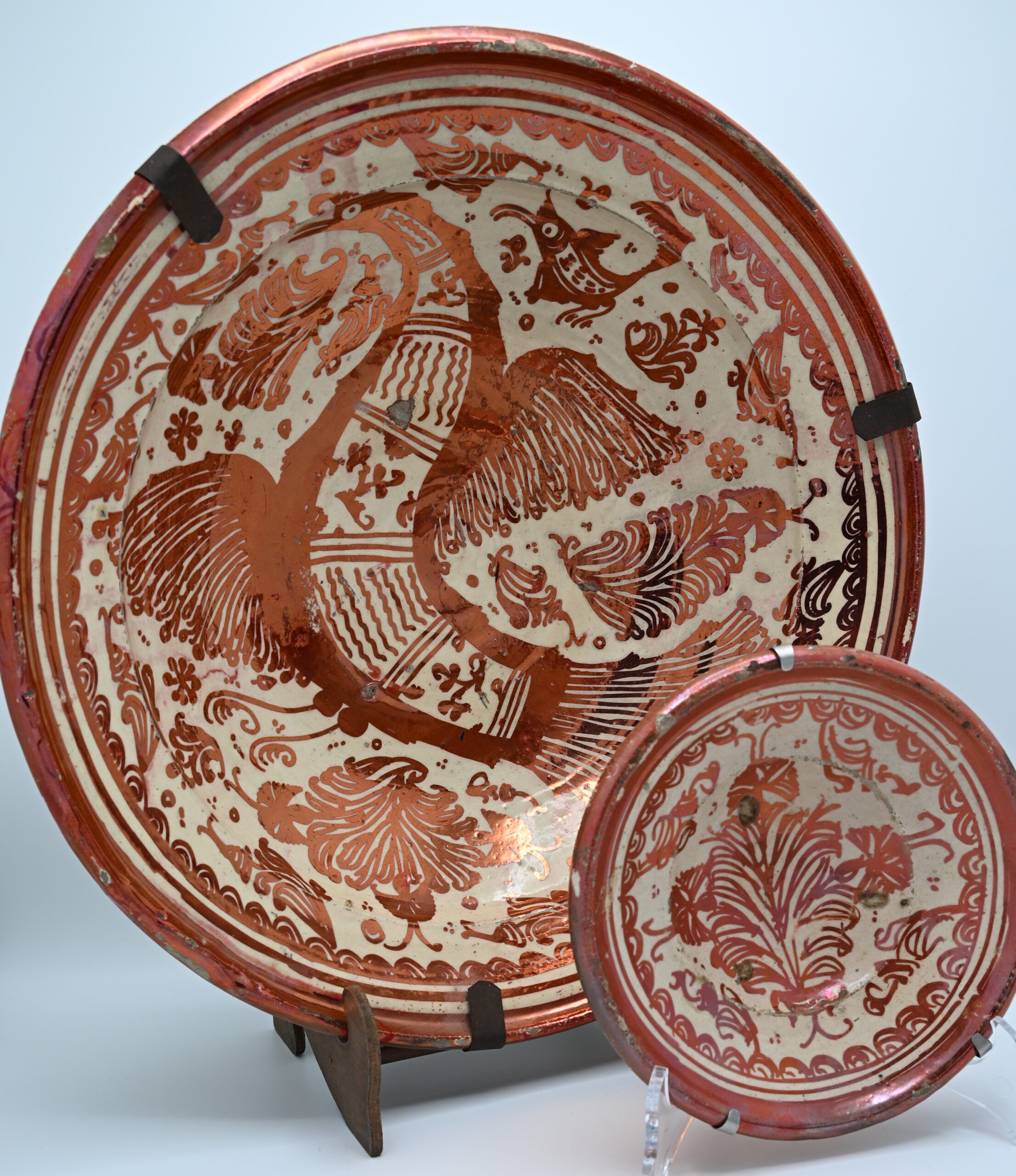
A flowering plant forms the focus of this eighteenth-century Hispano-Moresque dish from Manises, Spain. Three stylised blooms emerge above a fan of curved leaves, their stems gathered into a small vase at the base.
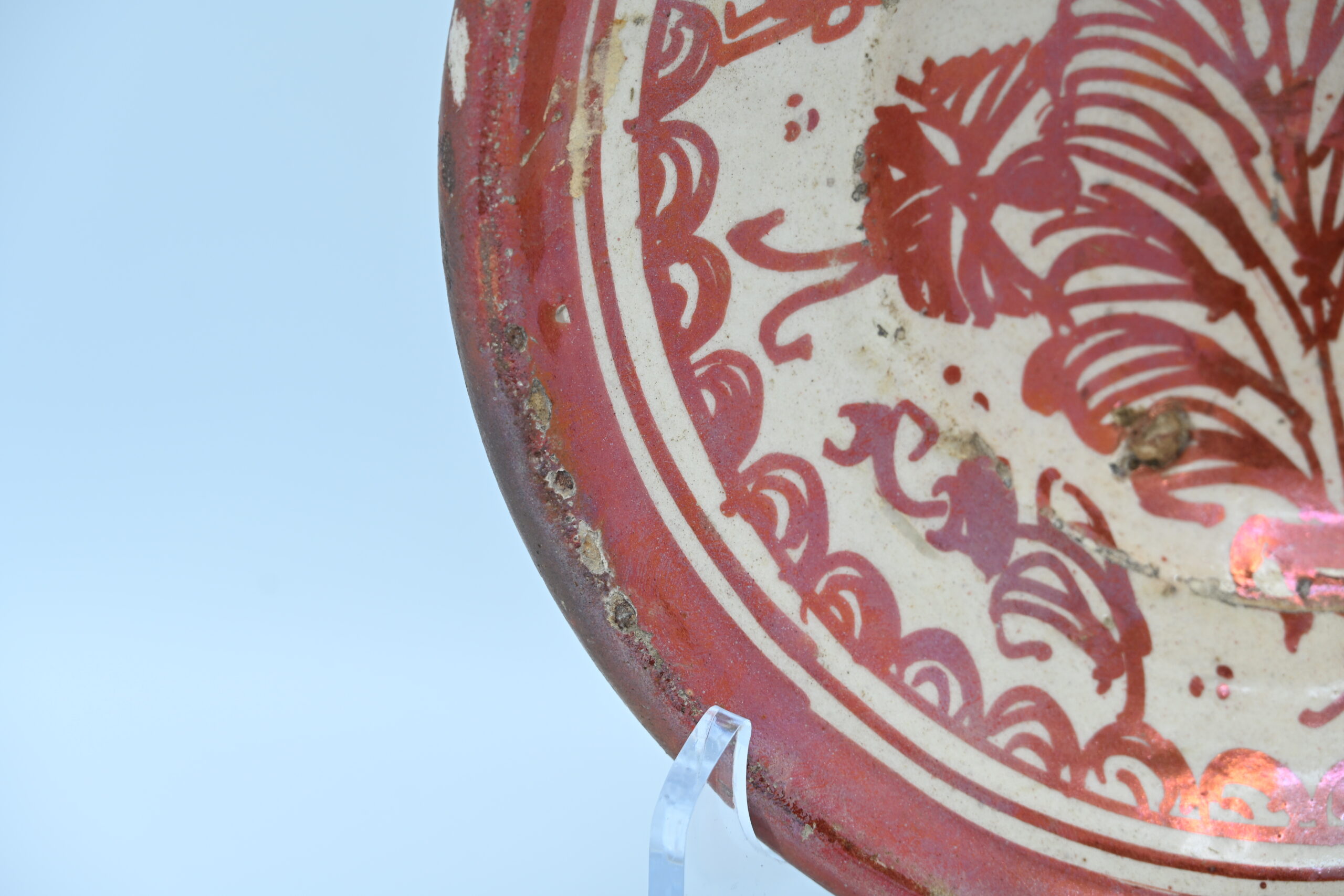
Smaller floral ornaments surround the central arrangement, interspersed with clusters of dots. A scalloped inner border and circular lines enclose the composition. Executed in copper lustre over a cream ground, the decoration develops pink and reddish metallic highlights as the viewing angle changes.
Copper lustre in Spanish ceramics
The reflective finish connects this dish to the long history of lustreware production in Valencia. Potters in Manises maintained the technique for centuries, preserving elements of Spain’s Islamic ceramic heritage while adapting their decoration to changing tastes.
To obtain the lustre, metallic compounds were applied to an already glazed vessel before an additional firing in a kiln with reduced oxygen. The resulting surface layer gives the decoration its distinctive sheen.
Details
Origin: Manises, Valencia, Spain
Period: 18th century
Material: Tin-glazed earthenware with copper-lustre decoration
Condition
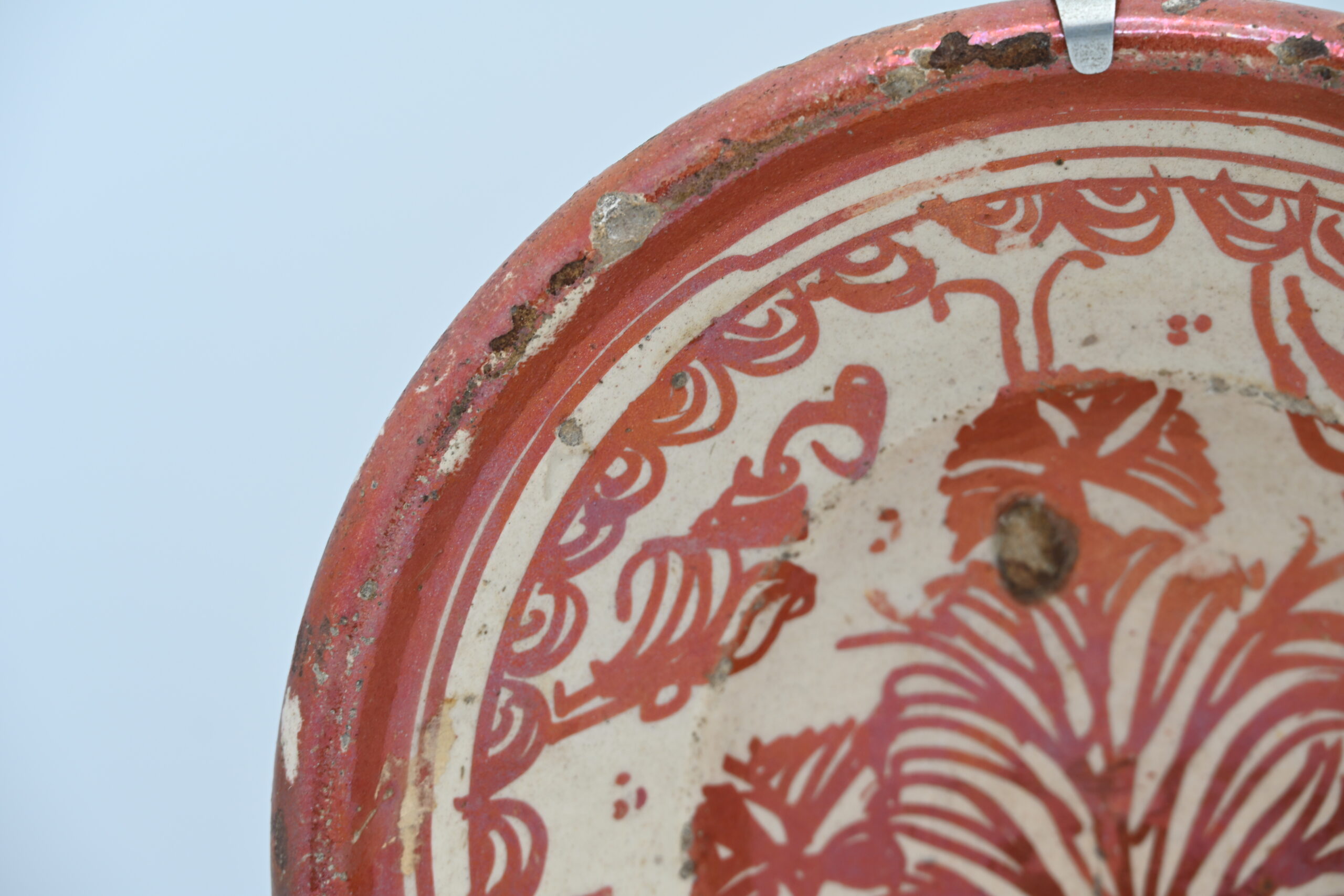
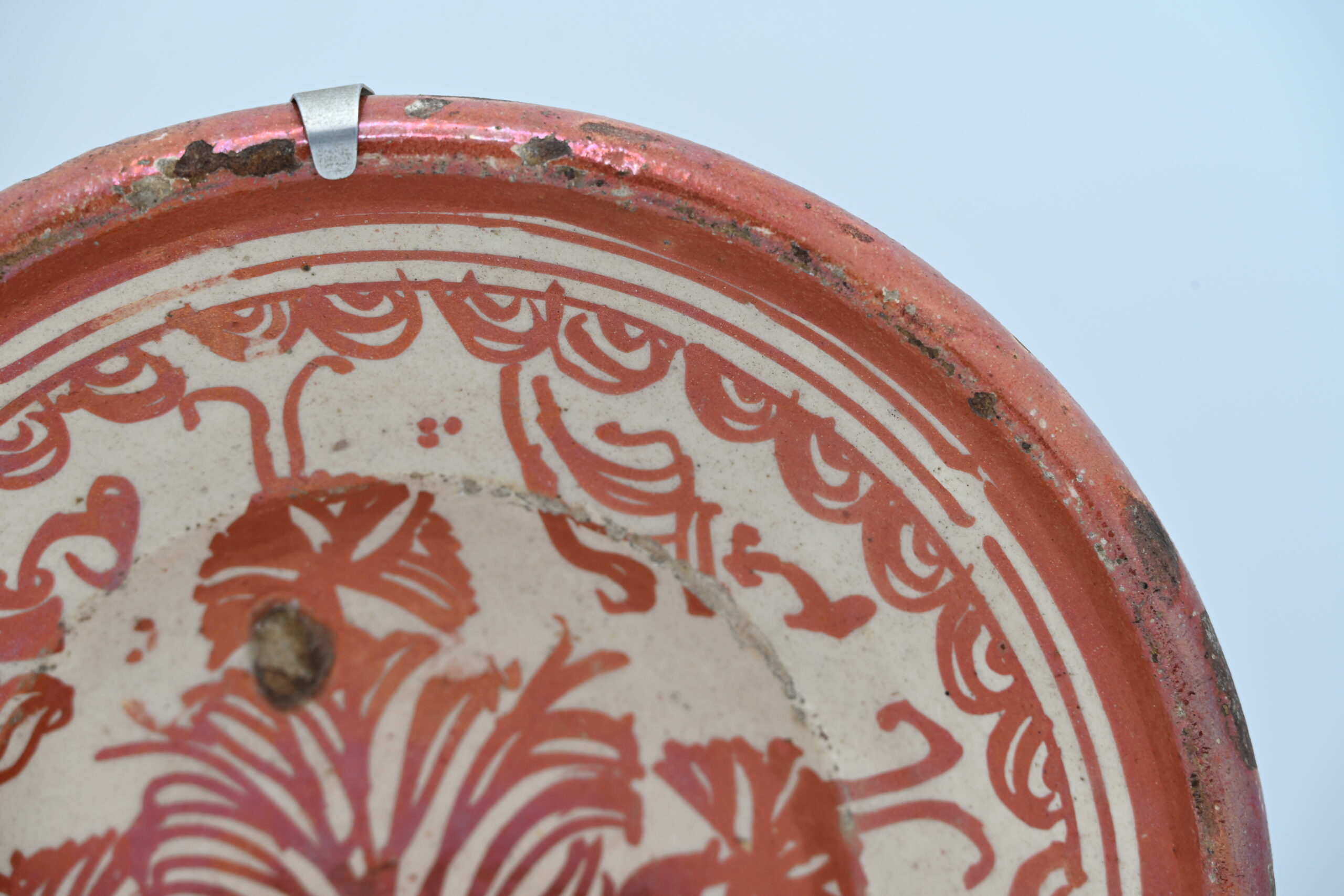
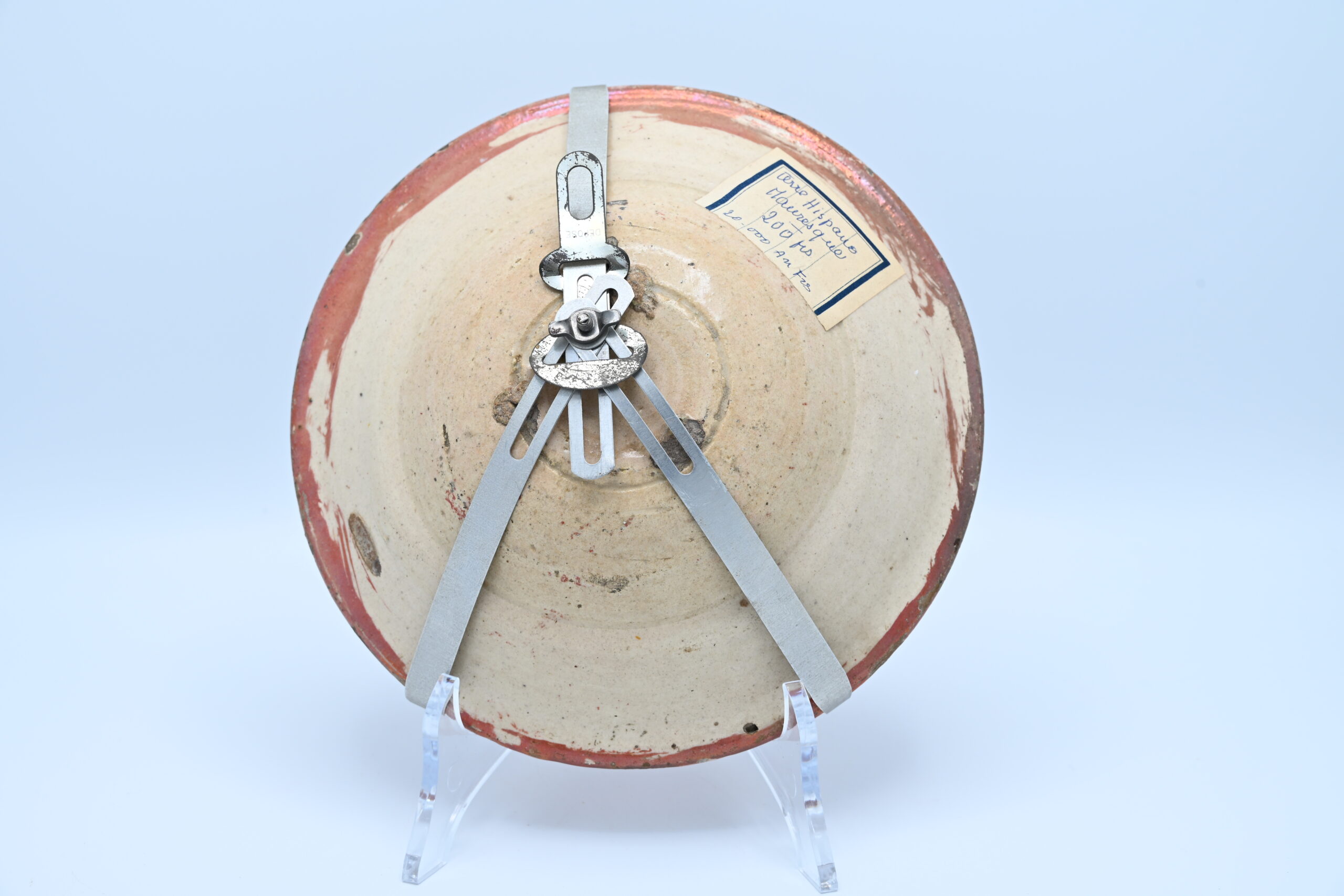
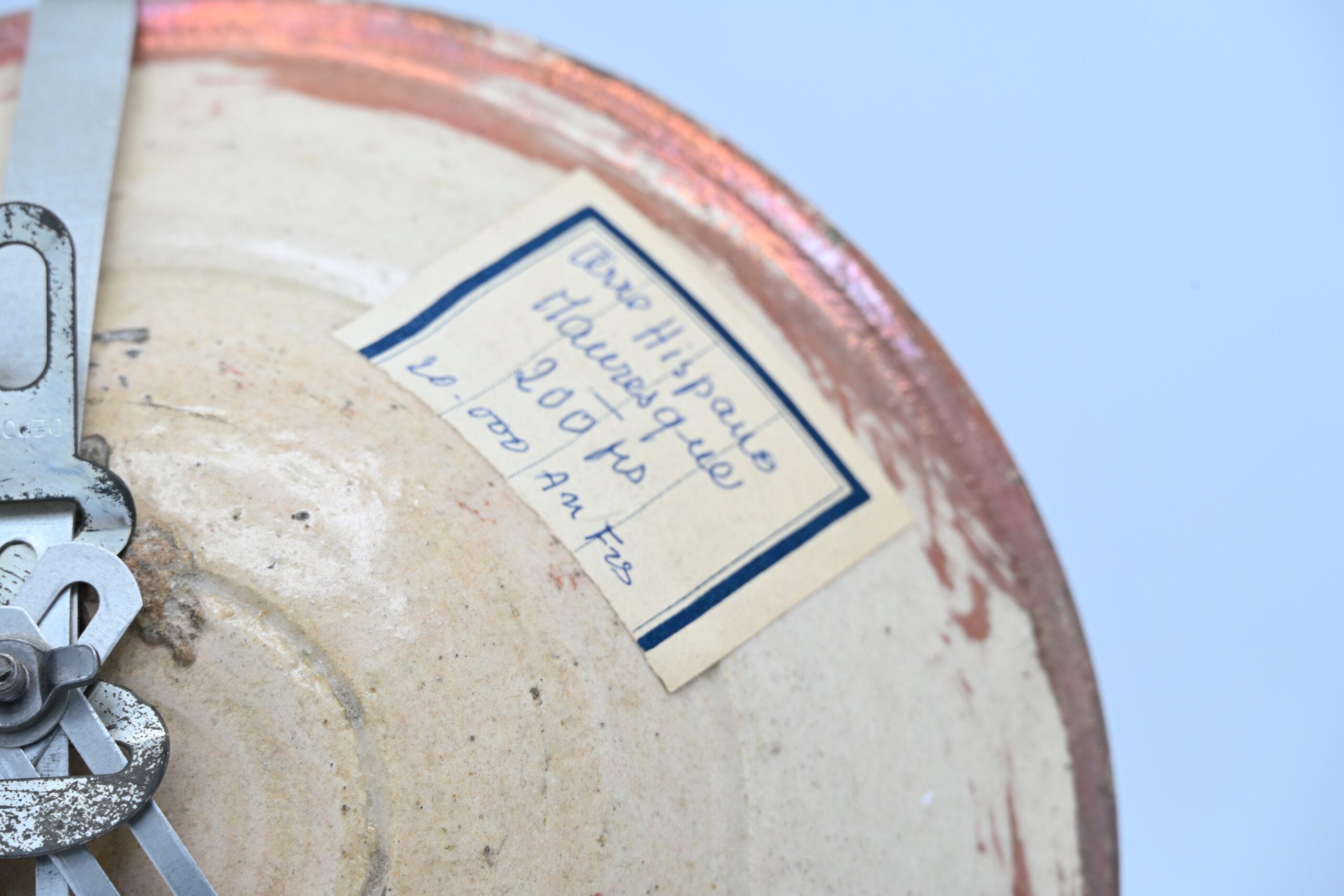
Wear to the decorated surface, with chips and glaze losses around the edge and within the central field. A curved line is visible across part of the centre. Please examine the photographs for details.
Details
Origin: Manises, Valencia, Spain
Period: 18th century
Material: Tin-glazed earthenware with copper-lustre decoration
Diameter: 19 cm / 7.48 inches
Condition
Surface wear, chips and areas of glaze loss, most pronounced around the rim. Please study the photographs as part of the condition description.