18th-Century Hispano-Moresque Lustreware Dish, Manises
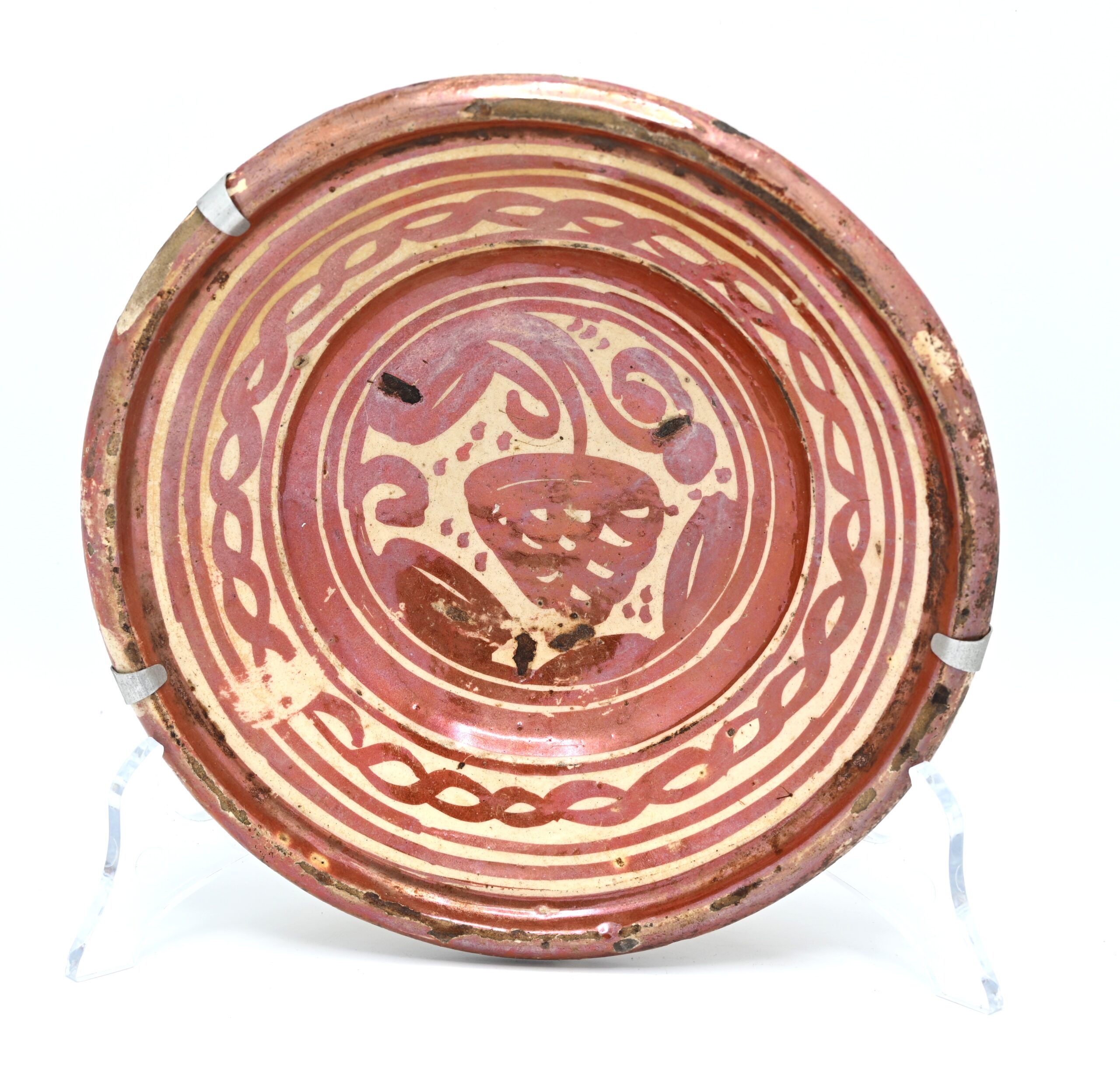
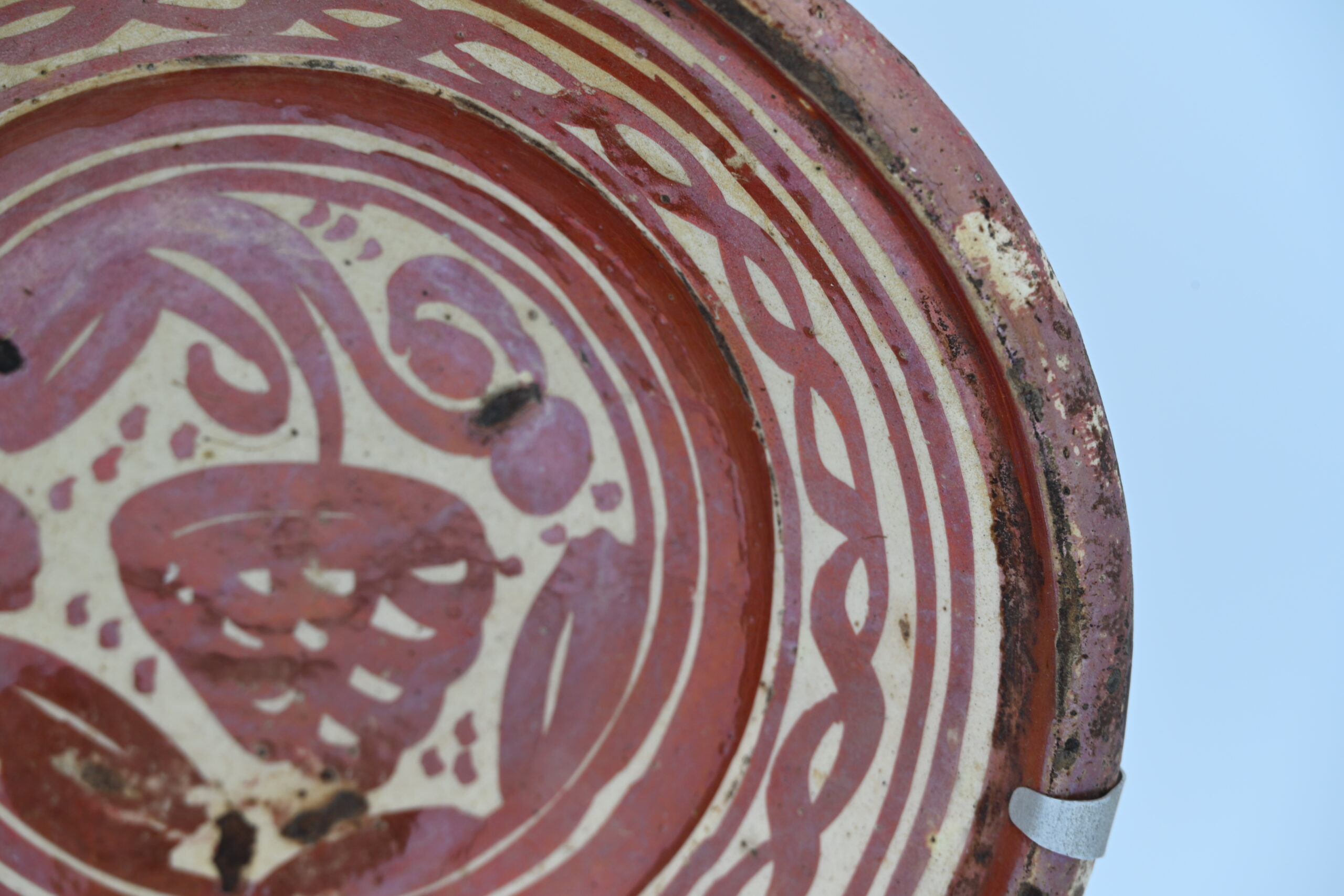
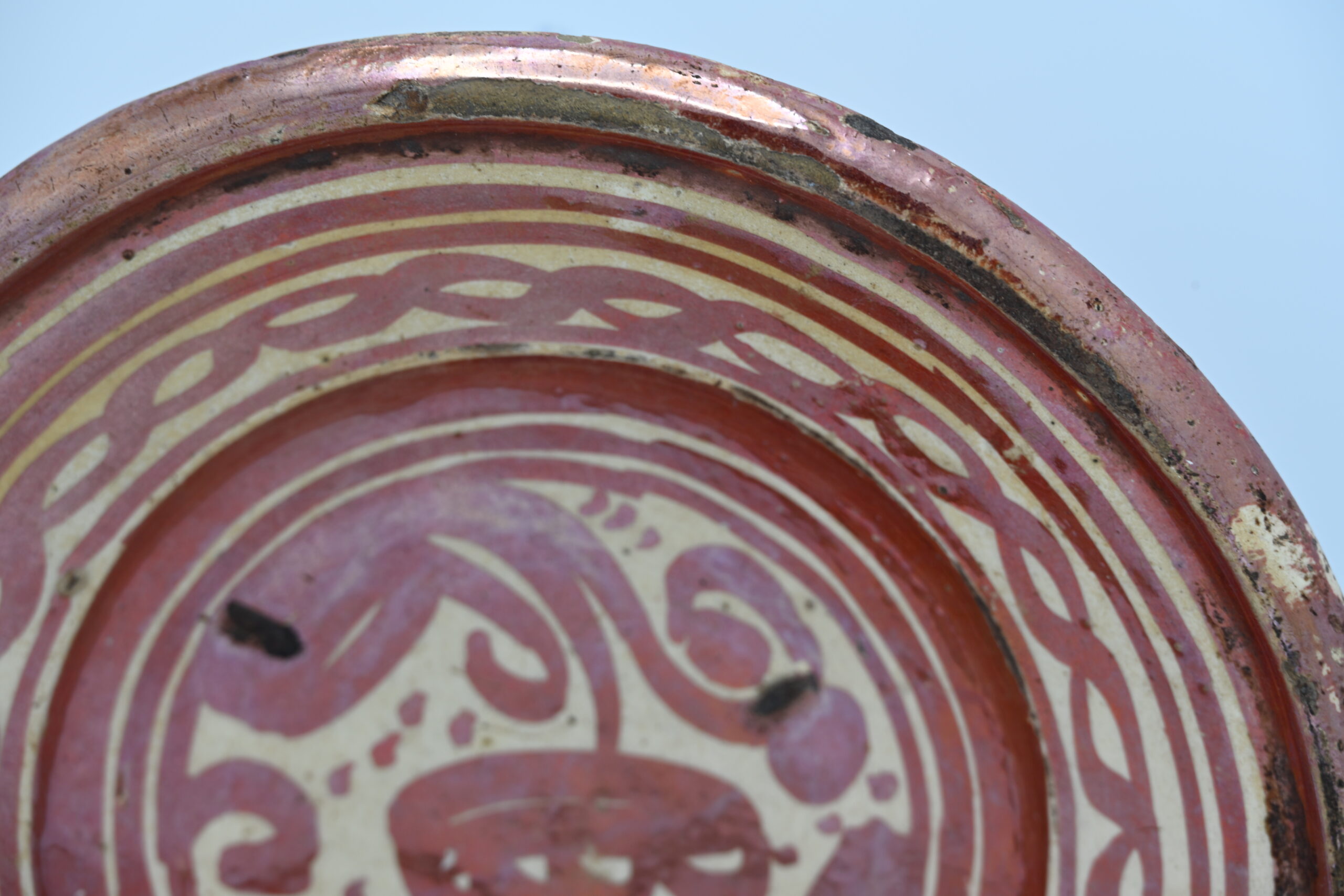
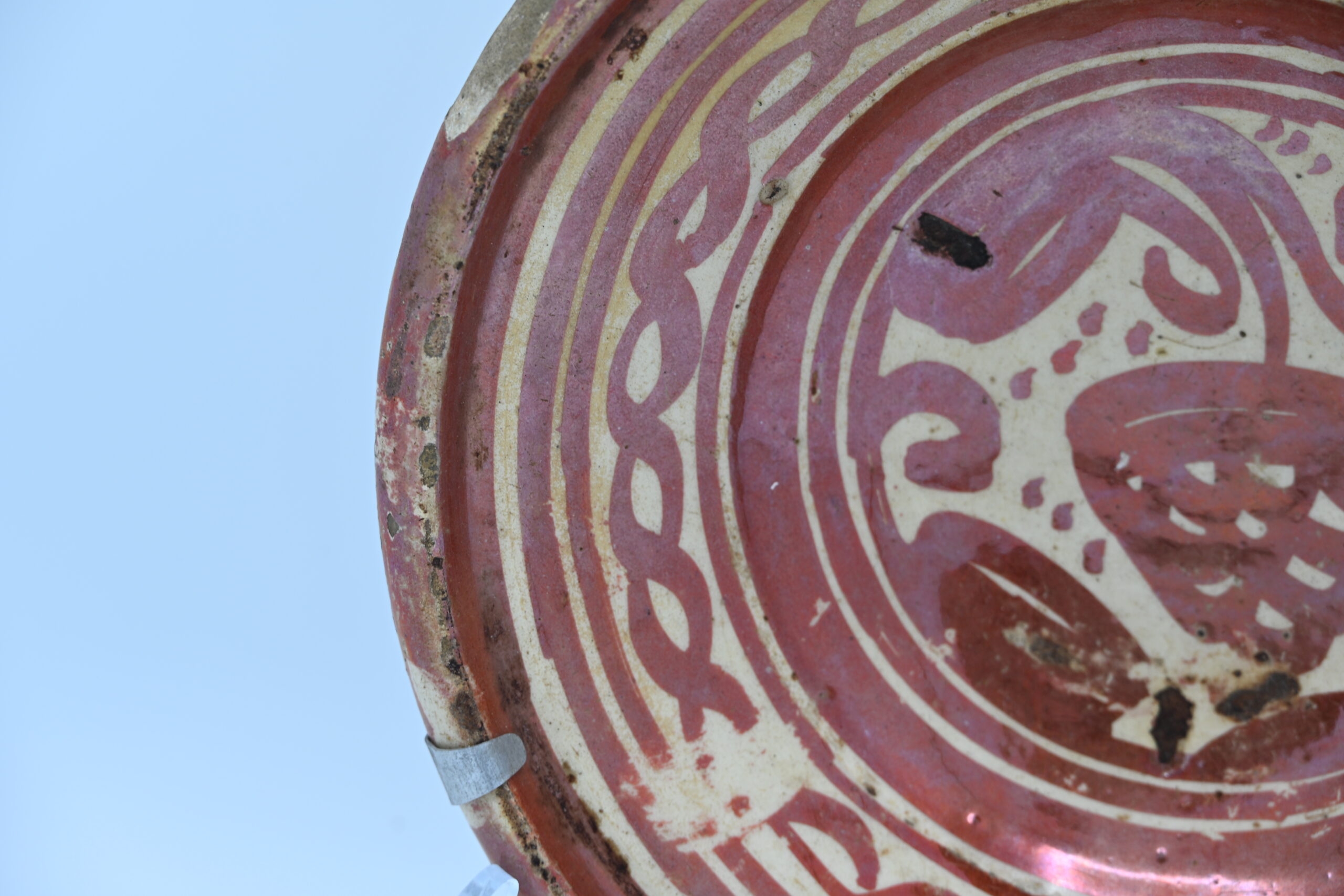
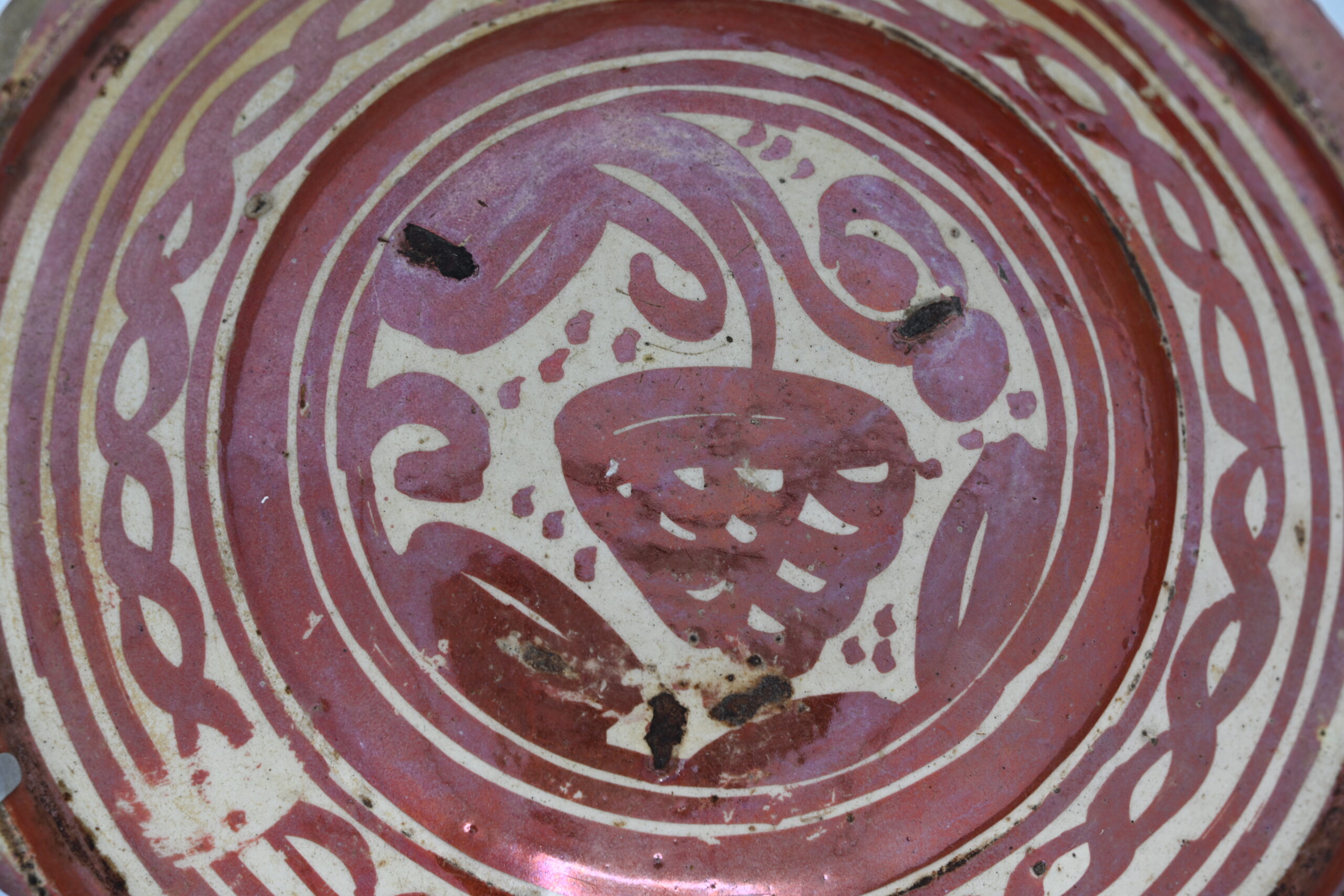
This eighteenth-century Hispano-Moresque dish was made in Manises, near Valencia, Spain. Copper-lustre ornament stands out against a cream tin-glazed surface, with a stylised botanical motif occupying the central well.
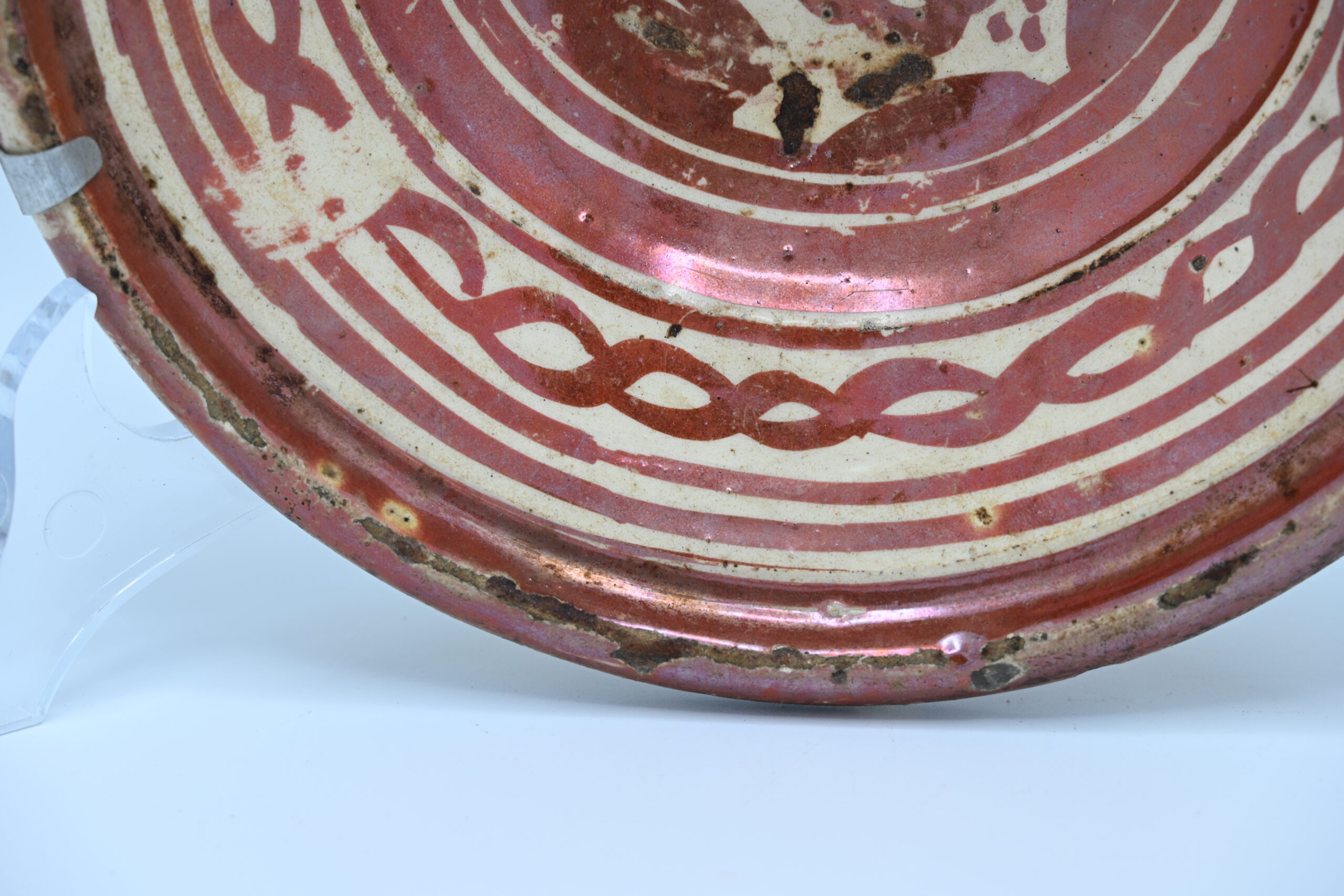
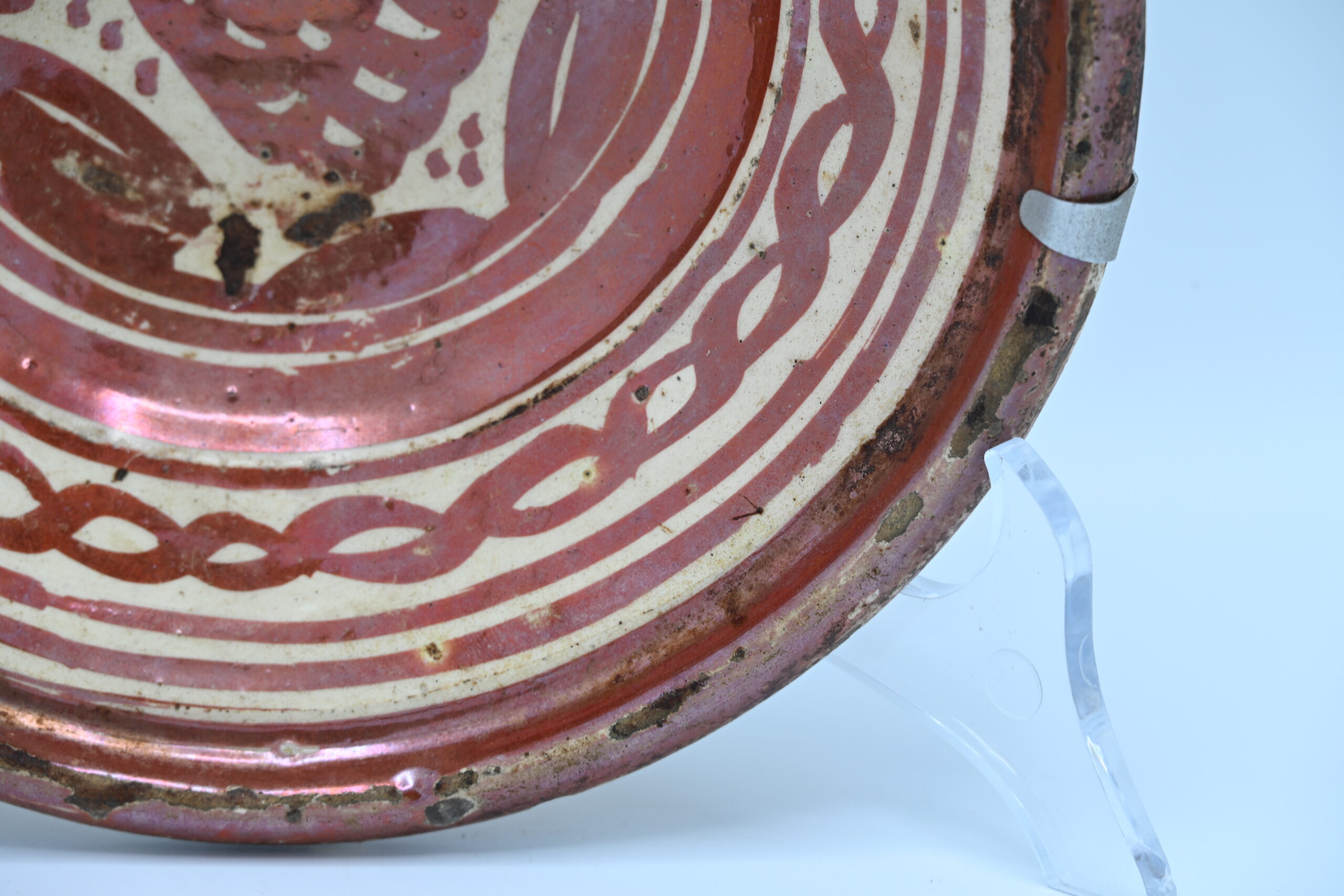
A broad border of linked oval loops surrounds the centre, separated by bands of concentric circles. The decoration follows the dish’s circular form, balancing the freely drawn central motif with the repetition of the border. Depending on the light, the lustre shifts between warm copper, reddish brown and pink metallic reflections.
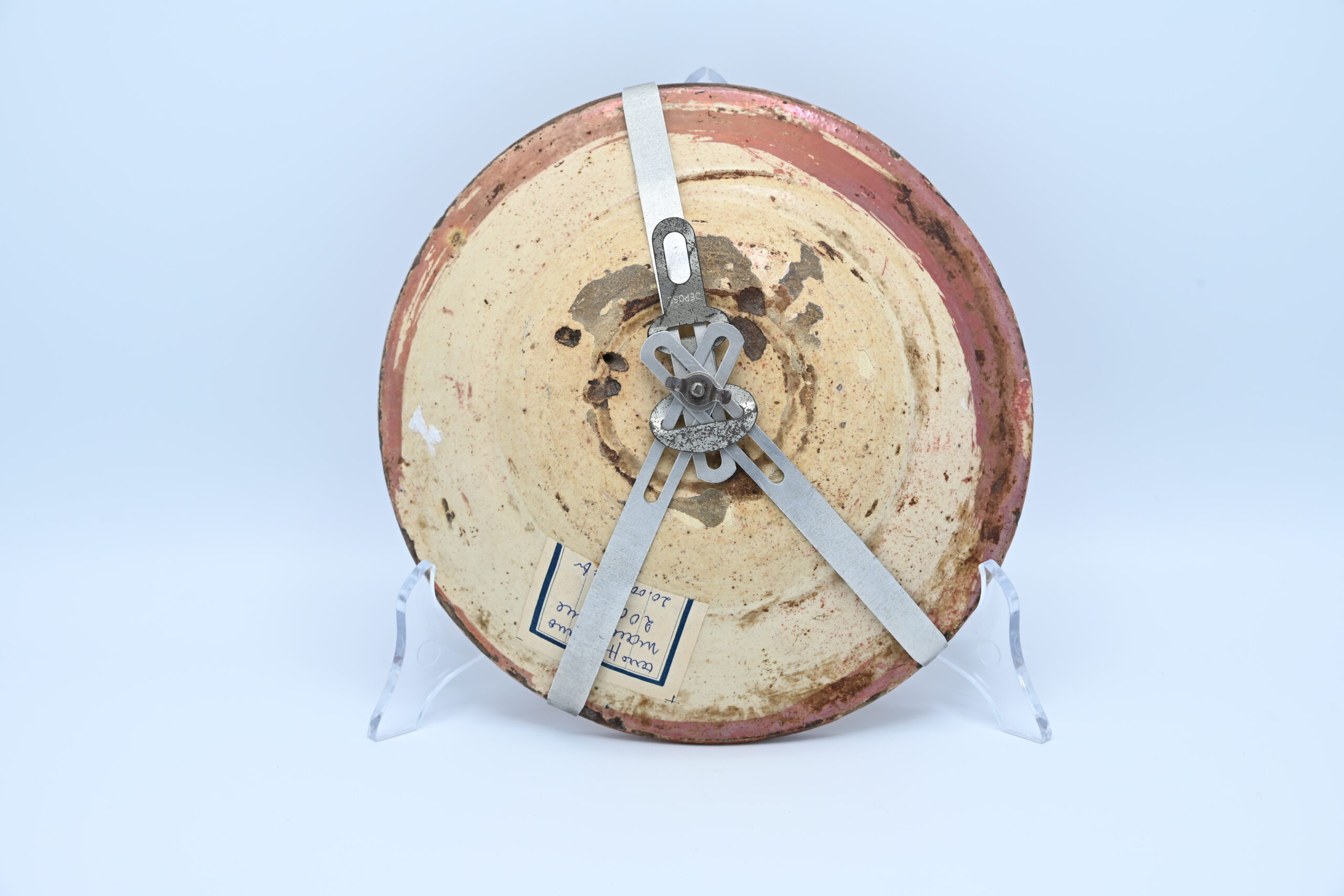
Old collection label to the back.
The Manises lustreware tradition
Manises was a major centre for Spanish lustreware, continuing a ceramic tradition rooted in the Islamic world. The term Hispano-Moresque reflects this shared heritage, bringing together techniques introduced through Islamic Spain and designs developed under Christian patronage.
Production continued into the eighteenth century. The characteristic metallic surface required a separate firing after the glaze had been applied, using reduced oxygen to create a thin reflective layer.
Details
Origin: Manises, Valencia, Spain
Period: 18th century
Material: Tin-glazed earthenware with copper-lustre decoration
Diameter: 19 cm / 7.48 inches
Condition
Surface wear, chips and areas of glaze loss, most pronounced around the rim. Please study the photographs as part of the condition description.